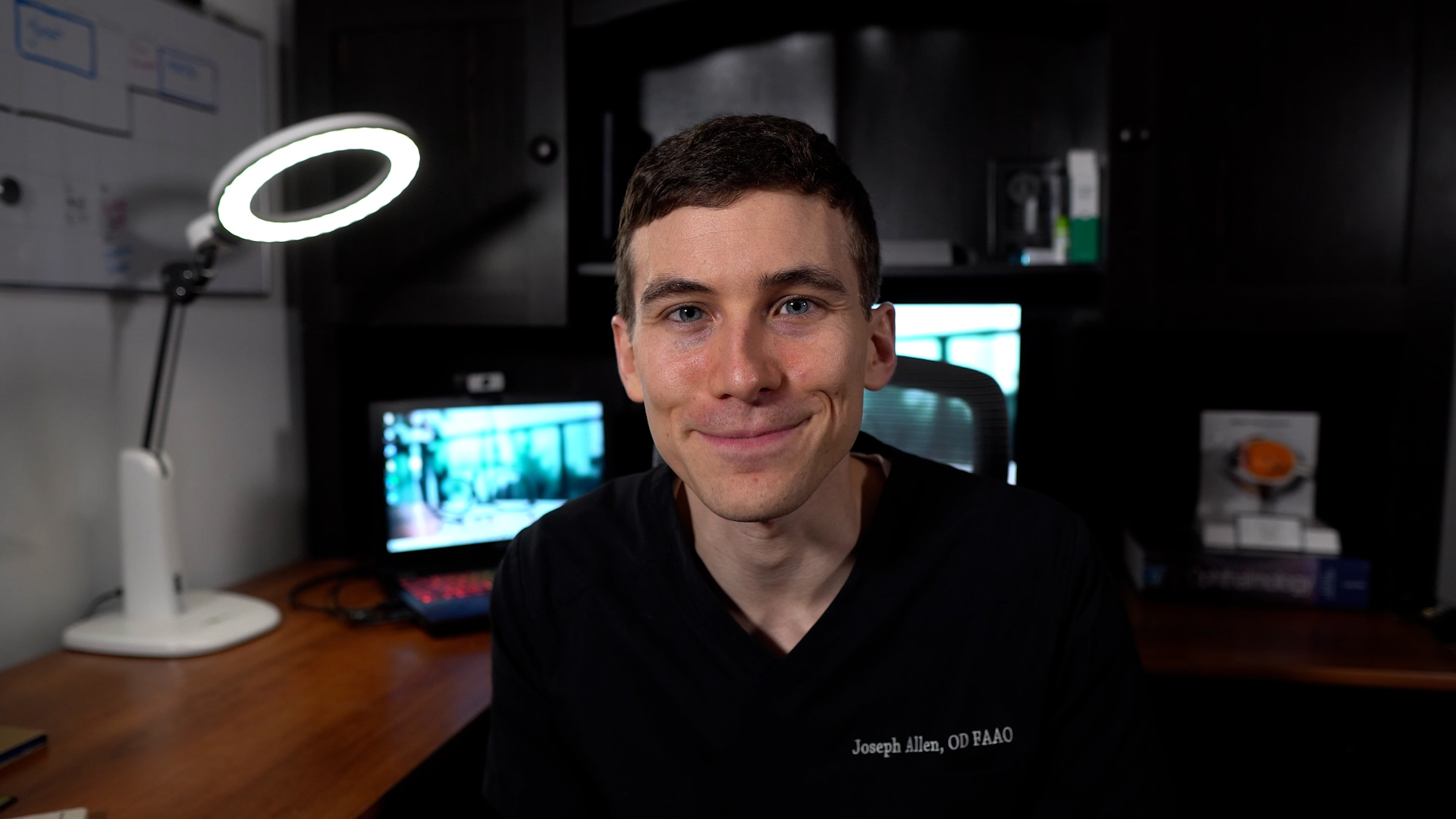
Joseph Allen, OD, FAAO, Dipl ABO, recently attended both the American Academy of Optometry and the American Academy of Ophthalmology. OD-MD practices and those specializing in comanagement care, this one's for you! Dr. Allen's three main observations between the two conferences were: 1) the shift toward earlier and more proactive care, 2) the emphasis on the connection between ocular and systemic health, and 3) the new technological innovation and integration of AI.
Joseph Allen (00:01):
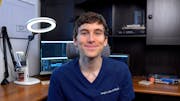
Hey eyes and shine, Dr. Allen here. Today I want to tell you about a really cool opportunity I recently had. In the span of about two weeks, I visited two of the largest eye care meetings in the profession. First, I went to Anaheim, California, where I attended the American Academy of Optometry. There, not only did I get a chance to give a lecture, but I got to connect with fellow colleagues and here's some of the newest research that's coming into the profession. And then just a few days later, I traveled to New Orleans for the American Academy of Ophthalmology. Now, these two different meetings bring together some of the brightest minds in our industry, but despite that, they're very different meetings and they share different perspectives of what is going on in our industry currently and what we can look forward to as we go into the future. And after connecting with colleagues, attending educational events, and seeing where researchers and industry is focusing their attention, I kind of came away with three big observations.
(01:02):
So, in today's episode, we're going to be sharing my key takeaways from these events and kind of where industry and our profession is going to go.
(01:18):
So probably the first big takeaway that I have from looking at what I saw at both of these academies is that our industry is gradually shifting to be more focused on earlier intervention and proactive disease management than simply being reactive toward forms of eye disease and potential vision loss. Probably the biggest and greatest example of this is how things have changed with glaucoma management. Long before myself, I became an eye doctor, I think historically you'd think, okay, well, for glaucoma, as soon as we see somebody has vision loss, we can prove it on visual field. Oh, then they have glaucoma, let's treat it. So, it was more of a reactive treatment. We wait till the eye pressure's high; we wait till there's nerve damage and visual function loss. Now let's treat. Now, that's not how we treat glaucoma. Now we look for patterns. We look for perhaps high risk.
(02:21):
Is there damage to the optic nerve? Even long before vision loss, we're trying to catch this disease and start to be proactive, so nobody ends up having vision loss. That's kind of the dream with glaucoma. But that same mindset shift is now being applied to other areas of the profession. One of the biggest examples is that of myopia, right? Myopia used to be, oh yeah, you become nearsighted. We simply prescribe glasses and contact lenses to help you improve and have the best visual function possible with kind of the disregard that yeah, you're at higher risk of a lot of other eye conditions and diseases as you get older because there's an anatomical change to the eye. And that's a big change with our profession now. Now we recognize this and there's so many other interventions that we can utilize at an earlier stage to blunt, slow down, or hopefully even avoid myopia at some point in the future.
(03:23):
Some of the biggest focuses that came out, especially in the Academy of Optometry, were some of the information about new spectacle lenses for myopia management as well as contact lenses and some even future hope of therapeutics that might be on the horizon. But this didn't just happen in myopia. You can of course stretch the same thought process over to ocular surface disease and dry eye as well as retina conditions. So, at the Academy of Optometry, but even more so I would say at the Academy of Ophthalmology, I saw more interest and even attended an educational event on the use of photobiomodulation and the use of certain light-based therapies on its impact on macular degeneration. We did a previous video on Eyecare Insiders kind of breaking down where some of those major clinical trials had been at. If you haven't seen that previous episode, we'll see if we can tag that down below or something definitely to look up here on Eyetube just to find that information because it's pretty lengthy and in depth, but it's still very exciting the fact that we can perhaps detect somebody developing intermediate macular degeneration and then apply a light-based therapy and not just… we can recover someone's visual acuity with that.
(04:49):
That's pretty profound along with some other possible benefits of affecting Drusen volume or even delaying or reducing the conversion to geographic atrophy. So still, lots of exciting things happening. But that's still that mindset that we can be more proactive and preventative in eye disease I think is a great shift in the industries and moving forward. Now the second big takeaway is the observation of how ocular health connects and extends to systemic health, and specifically an observation in the interest at both academies in the area of oculomics. If you haven't heard of that term yet before, this is basically the understanding the measurement of factors changing of the eye and how they reflect to information going on in the rest of the body. There are several different technologies that are being utilized in this space but think of it like kind of how you have the Oura ring and other kind of devices that people wear as a ring, a wristband, and they'll track your heart rate, your sleep patterns, your activity throughout the day, the number of steps you have, all of those measurements.
(06:05):
Well, now we have technology that is utilizing eye trackers built into glasses and other methods to watch how you're using your eyes throughout the day. But then you also have technology that utilizes OCT or fundus imaging to map out changes in your retinal vasculature. And they're looking at this data because it could not only tell us, "Hey, do you have hemorrhaging from diabetes, but do you have other evidence of early high blood pressure, cholesterol, heart disease, even neurological conditions like Alzheimer's disease?" So, they're utilizing all of this new kind of technology and advanced artificial intelligence kind of data mining to make these deeper connections beyond what just the human clinical experience can extrapolate. So, this is kind of part of the next frontier of our industry. It's not just using our advanced imaging to detect, "Hey, you're bleeding or thankfully everything's stable or you need to start a treatment to slow this down." Now it's analyzing this information, passing that on to our understanding of the rest of systemic health and educating or connecting the referral from just being an eyecare provider to discussing and having this conversation with other specialties in healthcare.
(07:34):
Certainly, that relationship has existed for a long time just with our knowledge base and clinical skills, but having this enhanced data set and catching things even maybe decades and decades earlier than we've been monitoring, there's huge potential in that in transforming our industry. Now on just a personal reflection, something that I'm also very interested in is the effects of this type of technology on corneal disease and how we utilize our eyes in day-to-day function. For corneal disease and Academy of Ophthalmology, I saw some instruments that are not available in the U.S. yet, but technology that can scan the surface of the eye, kind of like doing an OCT of the cornea, and then it'll use AI to flag where the irregularities on the cornea are. And I could see that being immensely beneficial for patient care for both optometry and ophthalmology because sometimes things are so subclinical, you miss it and want to understand why the patient's having difficulties or occasional pain or if that patient is truly the best candidate for refractive surgery.
(08:51):
If somebody has a corneal dystrophy that's subclinical and you do a surgery on that or refer for surgery on that and somebody misses it, that could end up leading to consequences down the road. And so, with this tech, we might be able to catch things, again, decades earlier. The other part I'm fascinated with is this technology of eye tracking and how that can not only be incorporated into instrumentation in the clinic, but perhaps wearable devices or something someone could use at home to know not only are people using their medication and their eye drops, but how are they using their eyes throughout the day? Are they not blinking enough on the screen, which we know probably people aren't, but it'd be really fascinating to see all of that data. Either way, I think all of this information, this data is going to be super helpful for us, but it doesn't change our clinical acumen as providers.
(09:46):
Ultimately, it's still up to us to put all this information together and then be able to make a proper recommendation and prescribe a valuable treatment for our patients to not only see their best today, but to keep them seeing their best into the future. Now, the final kind of big takeaway from these events, and this is probably what I've spent the most time thinking about, there is so much new tech, new innovation that's presenting itself to our professions. It's almost overwhelming. I think with the advancement of AI and applying that knowledge to so many areas at once, we're seeing this boom in information insights, and again, new tech hitting the scene, it's hard for any one professional to truly absorb all this information. So, it's tough to figure out what you need to be paying attention to, what's going to be the most valuable, and even when it comes to the industry side of things, what is going to survive?
(10:50):
Things are accelerating so quickly, what are doctors going to find valuable and useful to bring into their clinic? And even though some things may be novel, is it better than just what we already have? I think there's a lot of discussion that doctors can have about all of these points. One thing that I've had to face realistically in the clinic is because this information, there's so much new innovation happening in our industry, there's also a lot of innovation that's come available to consumers, our patients. So, I have patients who've come into the clinic who already know about some of this new advancement, new research that just hit us at these academies. And I'm like, "How do you know this?" Because they've been using access to various AI search bots. They already know about this. However, I think it places even more importance on our clinical knowledge and expertise because just because there's some small research study that broke ground and was published at one of these academies doesn't necessarily mean it's best for that patient.
(12:07):
It doesn't mean it's realistic for that patient to get into the studies. It's not even realistic to expect that that therapy will be available to them for who knows, three years? More? If ever. I think it puts even more emphasis still on us as professionals and the importance of collaboration because I went to both the Academy of Optometry, Academy of Ophthalmology, and the two professions, while we run side by side, we don't always, I think, communicate the best, but I think in our future, we need to collaborate in every way we can because while I love ocular surface disease and I know I'm pretty darn good at refraction, I am not a specialist in pediatrics. I am not a specialist in brain injury rehab. I also am not the top of the field in refractive surgery. I don't do cataract surgery. I know a lot about it, but I know more about the evaluation and post-management.
(13:14):
So as a profession, we need to have these strong communication ties to share our knowledge, to build a network of providers in our communities that best serve our patients because that's ultimately who this is all about. And I think that building that strong network of specialists and the people that are your go-to’s and having this conversation amongst everybody about what is happening in the industry, what tech are they utilizing, what is going to be valuable and most important. I think as we go forward, that relationship, as they've always said, your network is your net worth. I think that it can be pulled from being about your potential as a professional to being like, no, this is valuable for us as an industry for our patients. I think you building a network between yourself and the other professionals and experts in both fields, I think is going to be the superpower going forward.
(14:32):
Again, perhaps I've been thinking about this a little bit too much, but that is just kind of my third and big takeaway of recognizing how this type of growth and innovation is changing the value of what our role is as a professional because so much is going to be automated by this technology. But hey, those are my big three takeaways from attending both Academy of Optometry and Academy of Ophthalmology. Really two distinct meetings, but I really enjoyed both. It was just incredible to see our industry in two different perspectives. But please let me know, one, did you attend one, either of these or perhaps you attended both like I did. Let me know your thoughts. Were there huge takeaways that you had that reflect similarly what I saw or was there a key clinical thing that you took away, and you think will be super beneficial for your clinic that you look forward to implementing?
(15:32):
I'd love to hear those thoughts. But either way, thank you so much for joining me here. Keep an eye on it and we'll see you in the next episode.




































Please log in to leave a comment.