In this episode, Joseph J. Allen, OD, FAAO, Dipl ABO, talks about optometry’s adoption of epithelial-on corneal crosslinking, FDA-approved in late 2025. As the procedure becomes more widely commercially available, Dr. Allen stresses the importance of understanding not only how it differs from epithelial-off corneal crosslinking, but also what potential insurance hurdles may lie ahead. With ODs better-positioned to offer this noninvasive procedure, he highlights the opportunity to improve keratoconus screening efforts to better evaluate patient candidacy.
* While this video was in production, epithelial-on corneal crosslinking received a permanent J-code, J2789, effective July 1, to streamline the reporting and payment of the procedure.
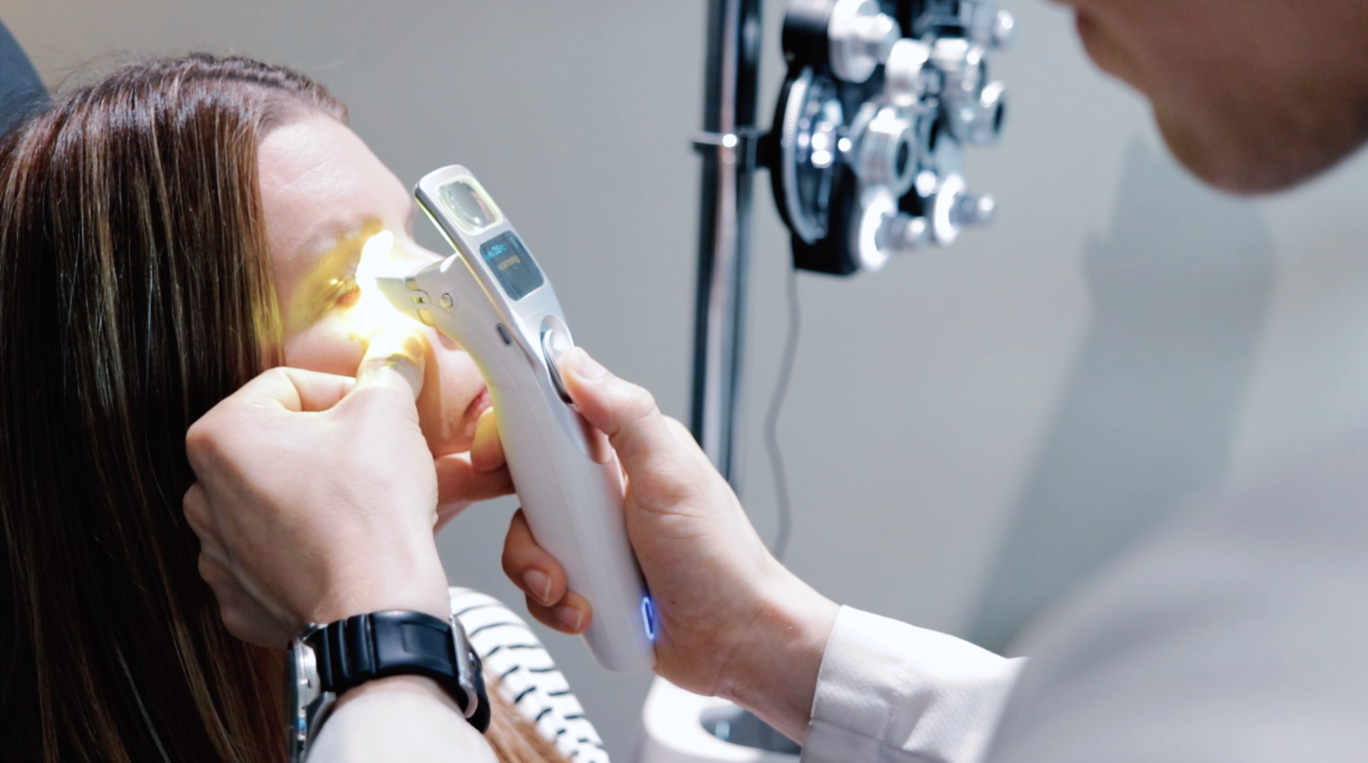
Joseph Allen: 00:00 Okay, so in case you didn't hear, epi-on corneal crosslinking was just FDA approved late in 2025, but is now becoming commercially available. And I think we need to talk about this because epi-off crosslinking was an absolute game changer for the industry being approved back in 2016. It completely changed how we manage our keratoconic patients. But now with epi-on becoming available, how is this going to change the game further, right? Is it going to shift things at all? First, understand that on the fundamental level, uh, epi-on crosslinking still works just like epi-off crosslinking. You're still using riboflavin and UV light to help strengthen and stiffen the cornea. The challenge before the reason why epi-off was kind of needed is because the epithelium being intact helped prevent the riboflavin from getting in and prevented oxygen from creating the reaction in the stroma. And so the new design that was just FDA approved uses new formulations of riboflavin along with supplemental oxygen that's kind of pumped into a little goggle housing.
01:16 Then you, the pulsed UV light still creates this reaction and then stiffens the cornea. And if you haven't read the phase three clinical trials that the FDA used to base the decision on, uh, just know that they had over 400 participants and they met their predefined clinical endpoints along with great tolerability and safety. But looking at the data here, we'll put on the screen between the two different trials, it not only showed stability over the course of six and 12 months, but in fact had a slight even flattening effect. And of course it did also show that this was more effective for younger patients, right? Patients who are under the age of about 30, 32, which I think totally makes sense, right? Just knowing how keratoconus works, we know that it's likely going to slow down with age just because the way collagen changes with age.
02:13 Now probably the next biggest question, uh, when I was looking through all of this and kind of thinking, okay, it's, it's effective, but naturally I want to ask how effective is it compared to the epi-off crosslinking? Well, there's been several different publications on this over the years because this epi-on versus epi-off question has kind of been ongoing outside the US and the most recent publications I can find show that still the epi-off crosslinking seems to have the greatest stability benefit for preventing progression, which I think is really the ultimate goal. However, uh, the reason why a lot of surgeons and eye doctors in general are really excited about this availability for epi-on crosslinking is because, uh, of patient adoption and just the ease of how this procedure is done. Really the, I think the limiting barriers for a lot of people, uh, can be not only things like the cost of the procedure, but really the fact that your vision is going to be blurry afterward, that there's going to be a lot of variability afterward for several months, that you're going to be possibly in pain and discomfort as the eye heals.
03:29 These are some pretty big barriers, especially for people who may be getting it, uh, in their younger years, right? If you have a student who is in high school or college or you have an athlete or you have a young professional, they maybe don't want to take that time, uh, away from school, away from work, away from their sports and have to deal with just the, the challenges of their vision fluctuating or any of that. And so that is where the epi-on crosslinking really shines, right? Because then as professionals, if you have a fast recovery and there's no pain or, or less pain and discomfort, I can't say there's no pain. Even if you look at the potential complications or, or side effects reported in the clinical trials, most people just get hyperemia, but there are some people who ended up with redness and some discomfort, dry eyes, uh, things like that.
04:28 But still, compared epi-on to epi-off, there's a dramatic kind of user experience, we'll call it. I often still have that question of like, okay, well, how do you make the decision of epi-on versus epi-off for a patient? Um, perhaps if you've seen really dramatic progression and they have a family history of, uh, their parents or somebody else in their family has keratoconus who also progressed fast, uh, these might be situations, especially if someone's young and you're thinking, "Okay, we need not just to stop at, we need to stop at, we need to do the best we can, then maybe we'd go epi-off." But I could also hear the argument that, you know what, let's just do epi-on and we're going to follow them closely. In reality, you're going to follow all these patients closely and watch for progression anyway. Whether they do epi-on or epi-off, I'm still going to be following them for progression their whole lives.
05:22 But then the next question that I had is, okay, so if we have a patient who we do epi-on crosslinking and let's say a few years later they do progress, do we decide to do epi-on again or at what point do you decide, "No, let's go back and do the epi-off procedure." I tried to look up and find somebody talking about that, but really couldn't find a, a straightforward answer. So if you know, if you're watching this and, and you have your own thoughts, please share them in the comments section because, uh, yeah, I'd, I'd love to know that. Otherwise, the other kind of exciting talking point I've heard people discuss is how doctors of optometry could start to offer this procedure to their keratoconic patients, right? Epi-off, uh, I know there's legislative barriers. I would argue most optometrists should be competent enough to do that procedure.
06:16 Again, there might be some legislative barriers there, but now with epi-on, that kind of isn't an issue. So now if there's an optometry clinic that has a lot of keratoconic patients, fits a lot of sclerals or, or other specialty lenses, this may again increase in open access to getting crosslinking even further because usually here in the US, doctors of optometry, uh, we're like the entry point for a lot of our patients. However, I will comment that, you know, probably still the biggest barrier to keratoconus and getting treatment crosslinking or whatever is identifying that somebody has keratoconus and we know a lot of clinics don't have topography still, or if they have topography, they're not using it as routinely. So the vast majority of people who are just starting to develop keratoconus, they slip by and we miss that all the time. So I think that's probably a huge area for the industry to grow is just developing routine, um, basically keratoconic topography screenings on patients and being more diligent about tracking those changes.
07:32 Either way though, now that it is becoming commercially available, uh, I think the next big question is all about coverage. It's going to be about cost of the procedure, right? If this is a new riboflavin formulations that are being used, what is it going to be for the cost of the medication? What is it going to be for the cost of running the procedure and is insurance going to cover the epi-on versus are they going to say, "No, we'll only cover the epi-off. Is there going to be like some coverage for the medication but not coverage for doing the procedure? Uh, what's going to be an out-of-pocket cost? These are all additional factors that I can't find any, this information anywhere at this time." And of course this may evolve too. Either way though, I think this new development is pretty exciting. I think it's going to change things a little bit over the next year and we'll just have to see how it all falls out.
08:25 Otherwise, thank you so much here for tuning in. Until next time, keep an eye on it and we'll see you in the next episode.























_1701789080.png?auto=compress,format&w=180)






.mp4.00_05_41_04.Still001_1680887186.jpg?auto=compress,format&w=180)

.00_13_09_19.Still001_1676069079.jpg?auto=compress,format&w=180)



























Please log in to leave a comment.