


Search
Search
AAO: 2026

Show Description +
Dr. Wykoff shares first-time results of the phase 3 DAYBREAK trial, which showed that 54% of patients with wet AMD treated with tarcocimab tedromer (Zenkuda, Kodiak) achieved a 6-month dosing interval.
Posted: 10/15/2026
Dr. Wykoff shares first-time results of the phase 3 DAYBREAK trial, which showed that 54% of patients with wet AMD treated with tarcocimab tedromer (Zenkuda, Kodiak) achieved a 6-month dosing interval.
Posted: 10/15/2026
Read Transcript
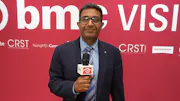
Hi, I'm Charles Wykoff from Houston, Texas. Great to be here reporting from the AAO Subspecialty Day 2026. So this year I had the privilege to present DAYBREAK data on behalf of the co-investigators, fascinating phase-three clinical trial that I'll unpack here.
So the base concept is that our current anti -VEGF biologics have half-lives in humans of about one week. And the hope and promise of an ABC or an antibody biopolymer conjugate is leveraging covalent linkage to a high molecular weight, optically clear biopolymer that can meaningfully extend that half-life, essentially triple it to a half-life of about 20 days. So in that construct, DAYBREAK is a phase-three randomized controlled trial involving 667 treatment-naive wet AMD patients designed to execute two different pivotal analyses against a common single comparator arm fixed two milligram aflibercept Q8 dosing after three monthly loading doses, sort of the gold standard comparator arm.
And that was compared against two different investigational products, two different ABCs. So one of them was the anti-VEGF tarcosimab, and the second was the bispecific anti-VEGF plus anti-IL-6 tabirafusp. And both of these ABCs are conjugated components in addition to free protein designed to deliver durability and immediacy respectively. And the way these molecules and injections were built was based on many previous phase-three clinical trials, some successful, some not, coming to these formulations. So the last aspect about the trial, the most interesting aspect of the trial actually is actually the incorporation of an AI algorithm into the point of care to quantify IRF and SRF volumes to determine re-treatment. So we did not use, quite intentionally, CST change or visual acuity loss to drive re-treatment. The goal was to approximate how retina specialists actually determine ex-state of disease activity and then use that as the driver for re-treatment. And during the talk, we actually show five very specific examples that would not have met re-treatment criteria in any other modern pivotal wet AMD trial, but all got re-treated in DAYBREAK.
So now for the actual data, first, tarcosimab was given as four monthly doses and then monthly visits with as-needed re-treatment from monthly to a cap 24-week dosing. Primary endpoint was change in vision. Baseline was about 20/60 visual acuity and balanced across the arms. The primary endpoint was met, demonstrating equivalence between tarcosimab and aflibercept dosing. CST outcomes were also overlapping and essentially identical to the one-year endpoint. Safety, there were no intraocular inflammatory events.
And the most interesting aspect from tarcosimab was actually the durability. So remember we're using a strict treat-to-dry and maintain dry approach with essentially any fluid above noise. And with that, 54% of tarcosimab patients achieved a six month or 24-week dosing interval at the one-year primary endpoint and about 5% were on monthly dosing. The median number of injections after the loading doses, so between 16 and 48 weeks was one with tarcosimab and five with aflibercept.
So then the other comparator, completely separate pivotal analysis, was actually tabirafusp. And that was also given as four monthly loading doses, but then was given as fixed Q8 week dosing in addition to additional monthly dosing if indicated with the same AI algorithm, same primary endpoint, same baseline visual acuity about 20/60. This comparison also met the primary endpoint demonstrating again non-inferiority and in fact equivalence between the tabirafusp and the Aflibercept population. In this comparison, there was also a protected key secondary endpoint of CST change that also met the primary endpoint between the arms. Safety, there was one case of IOI associated with tabirafusp. And then looking forward, the future of tabirafusp is to continue to explore which patients may benefit from combined IL-6 and VEGF inhibition, both in DAYBREAK and wet AMD, but also in the ongoing phase three ALTO trial in DME.
And then maybe most importantly for the field currently is where tarcosimab's going. So there are now five positive phase three clinical trials, two in wet AMD, two in DR, one in RVO, and a multi-indication BLA target in the FDA is planned for submission later this calendar year. Thank you.
Bryn Mawr Communications, LLC, and Eyetube.net are not affiliated with the official program of AAO: 2026.




















Please log in to leave a comment.