


Search
Search
AAO: 2026

Show Description +
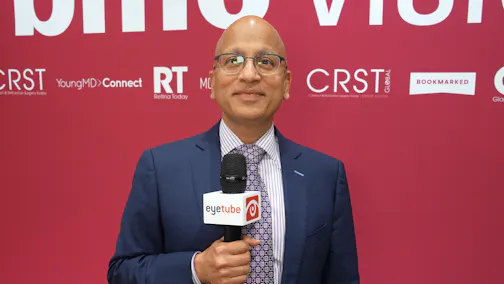
Dr. Khanani reviews interim efficacy and safety data from nine patients with center-involving diabetic macular edema treated with subretinal delivery of sura-vec (ABBV-RGX-314, Abbvie/Regenexbio); so far, the therapy has provided anatomic control and reduced treatment burden.
Posted: 10/21/2026
Dr. Khanani reviews interim efficacy and safety data from nine patients with center-involving diabetic macular edema treated with subretinal delivery of sura-vec (ABBV-RGX-314, Abbvie/Regenexbio); so far, the therapy has provided anatomic control and reduced treatment burden.
Posted: 10/21/2026
Read Transcript
Hi, I'm Arshad Khanani from Sierra Eye Associates here at the Retina Subspecialty Day at AAO 2026. I presented the first time interim results for phase-two study for diabetic macular edema, patients treated with subretinal sura-vec. This is called the ELEVATE study. This is actually an investigator initiated trial that I started and is sponsored by Regenxbio.
What are we looking in this study is to evaluate if subretinal surgery is safe in diabetic patients. Can we do phakic and pseudophakic patients? Can we see the similar efficacy and safety of sura-vec that we have seen in the wet AMD patient population with sura-vec, as well as can we reduce the treatment burden for our patients with diabetic macular edema? As practitioners, we know that diabetic macular edema patients don't receive the injections they need to maintain vision in the real world. There's a high dropout rate in patients with diabetic macular edema, as well as vision threatening complications that can happen due to undertreatment.
So the goal here is to evaluate gene therapy as a sustained delivery platform for these patients to see if we can maintain anatomic control and maintain or improve vision. This study is enrolling 18 patients. I shared the interim data for nine patients. These are patients who are previously treated and they have to respond to ranibizumab before they can be enrolled. We are studying two doses, a lower dose and higher dose. These are the similar doses we have seen for the wet AMD program for sura-vec.
So looking at the data, I think safety is important. We were able to successfully perform surgery in nine patients without any complications. We did not see any new safety signals. We did see the retinal pigmentary changes, but in these patients, they happened later and were milder in intensity so far to date. We did see cataract worsening as expected in the phakic patients. Again, this is the first time we are studying phakic and pseudophakic patients with sura-vec. These patients had cataract surgery done without any complications.
In terms of disease control, we saw maintenance or improvement in vision in both of the cohorts, the low dose and high dose. Similarly, disease control in terms of anatomy, we saw maintenance or improvement in CST. And here we actually saw dose response were higher. Dose patients actually had better reduction in anatomy. Now obviously this is a small study, so this just could be the variability of the baseline patient population, but we are seeing anatomic control in both of the doses.
And lastly, we saw significant treatment burden reduction in these patients. Many of them treated with second generation agents prior to going into the trial, and that number was 70 to 80%. We have seen a safety profile that's comparable to the wet AMD clinical trials and we have seen meaningful reduction in treatment burden and maintenance or improvement in visual acuity as well as anatomy.
Thank you very much.
Bryn Mawr Communications, LLC, and Eyetube.net are not affiliated with the official program of AAO: 2026.







Please log in to leave a comment.