


Search
Search
Show Description +
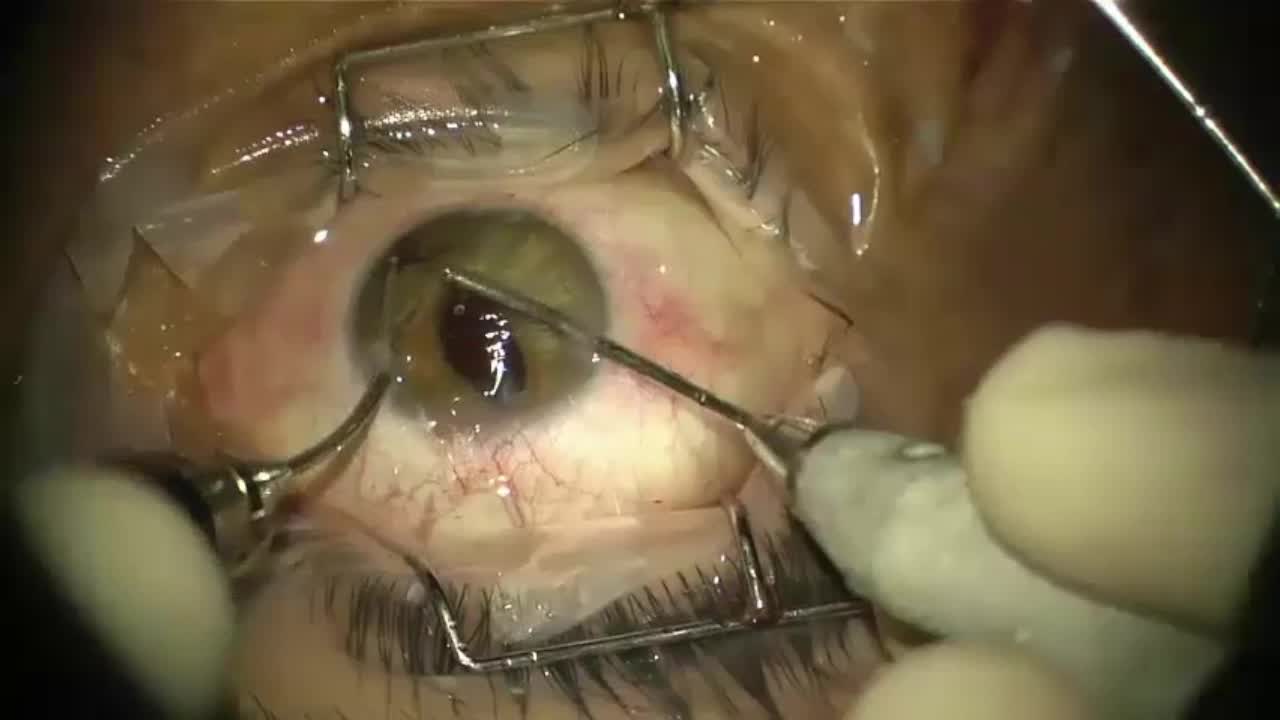
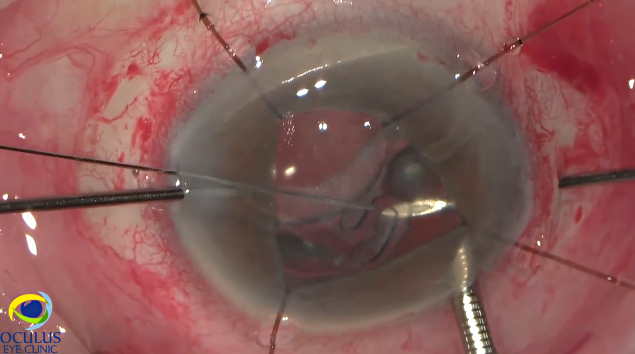
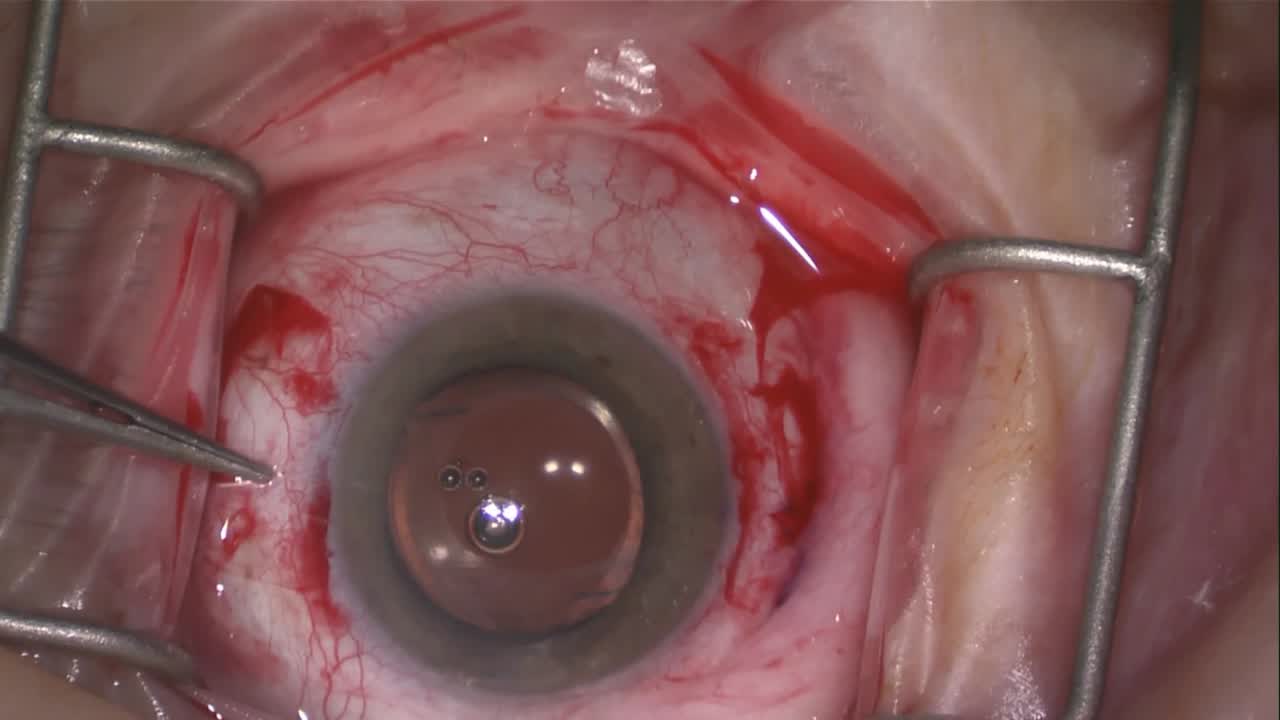
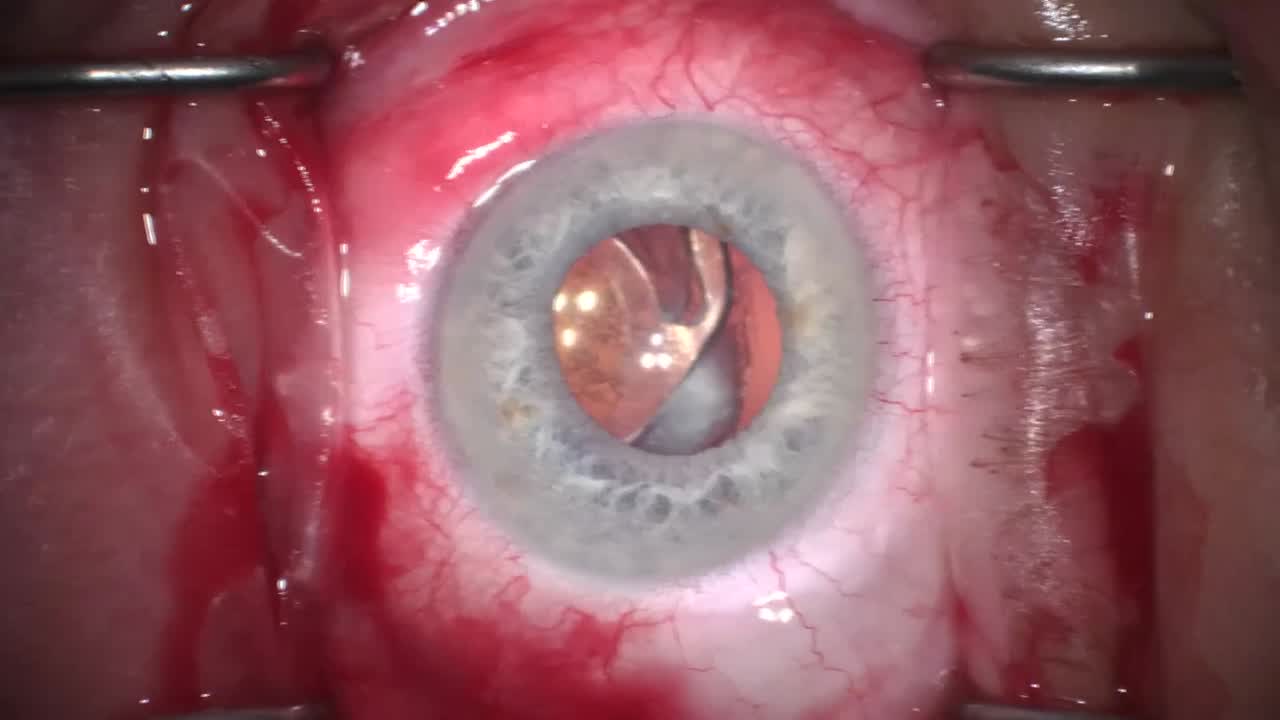
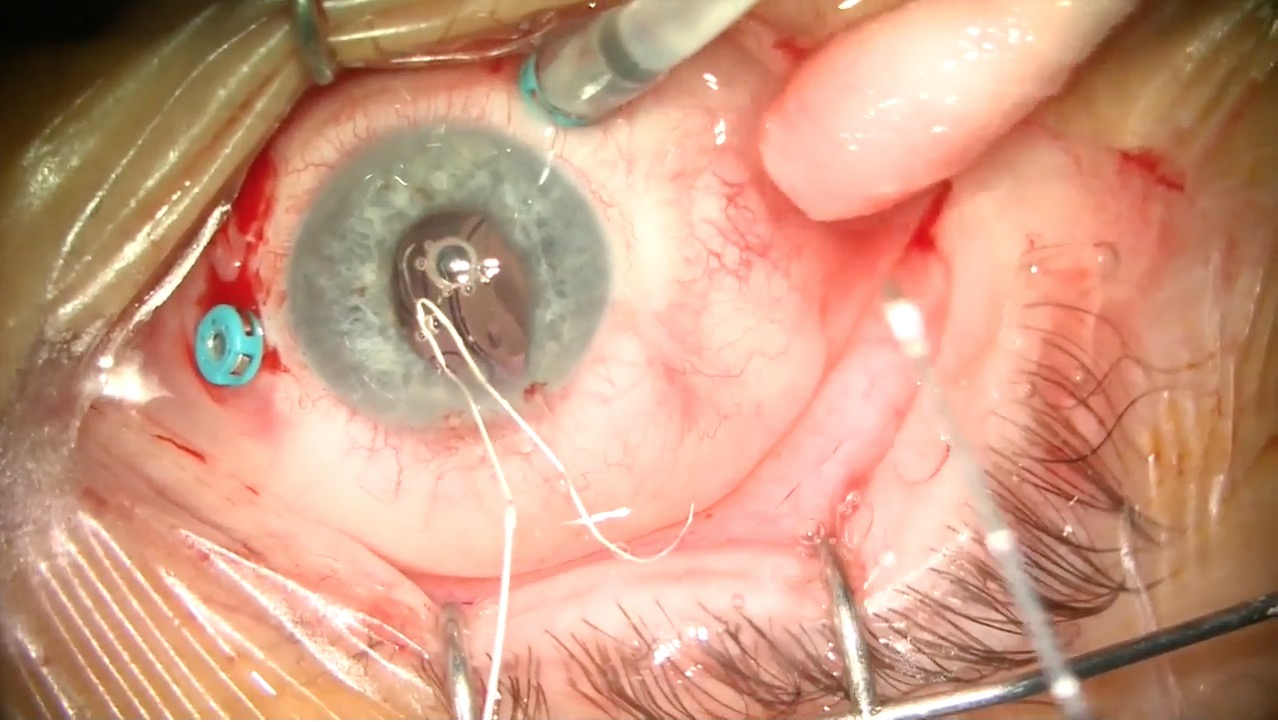
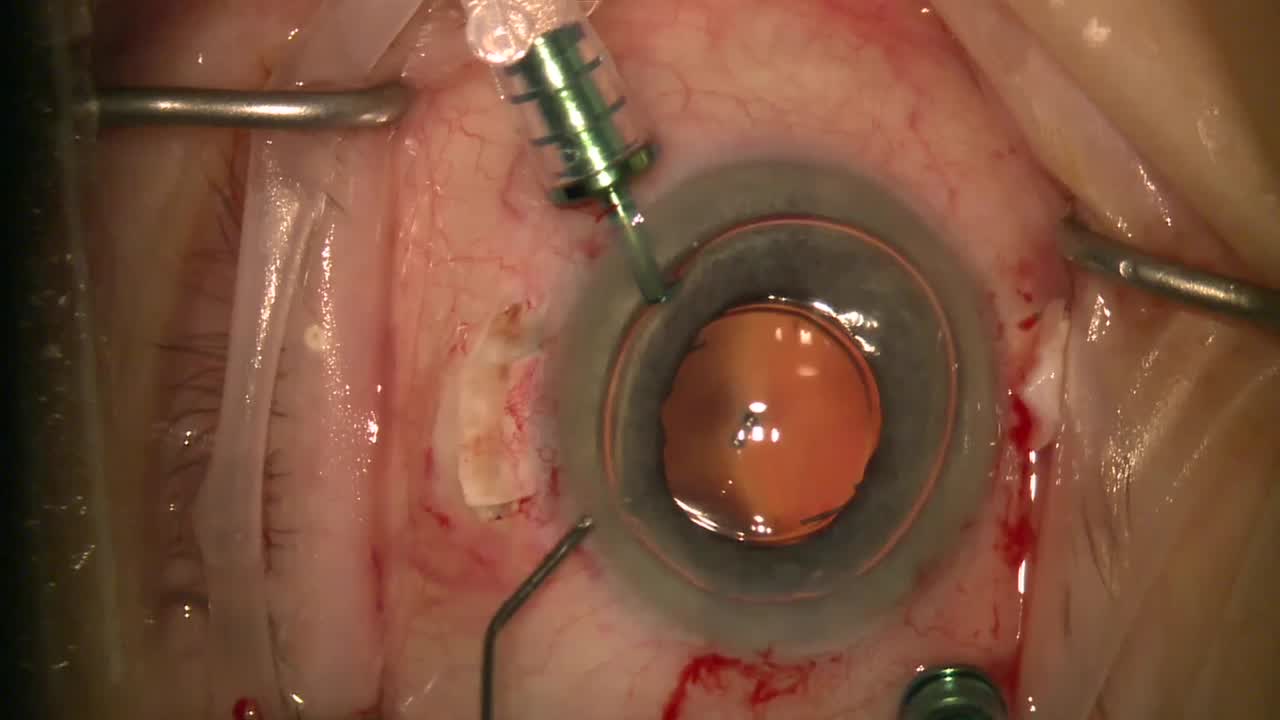
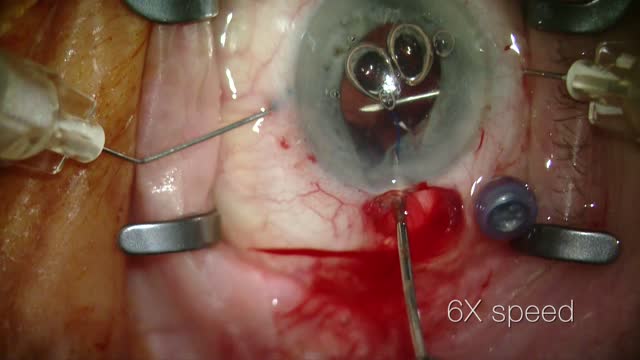
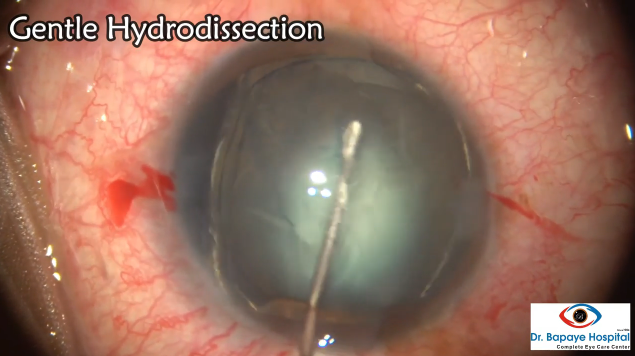
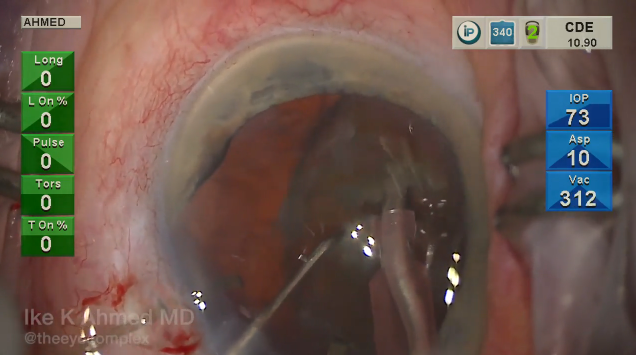
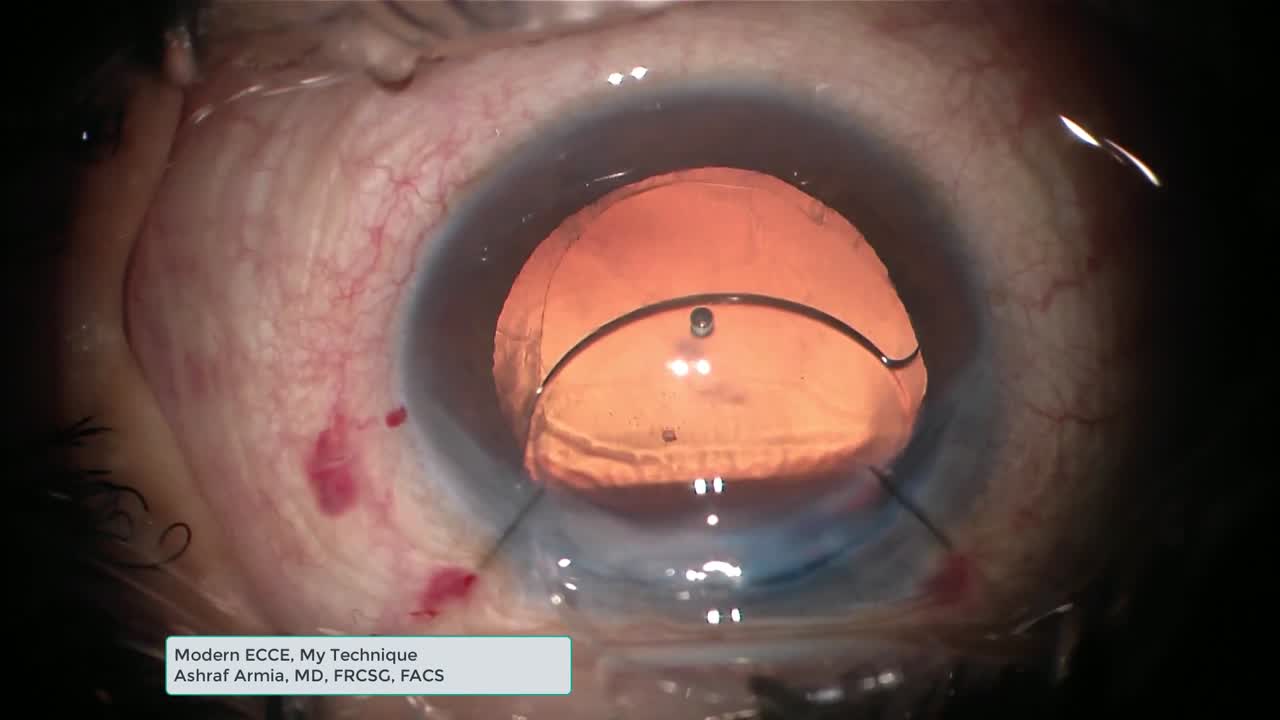
Cathleen M. McCabe, MD, presents a 62 year-old patient who suffered a traumatic cataract as a child that had gradually worsened in recent years. After performing a vitrectomy, the vitrector tip is used to prolapse the capsule and black cataract into the anterior chamber. A miLoop device (Iantech) is introduced into the eye and the nitinol loop is retracted to bisect the lens. After the nuclear fragments were then removed through the scleral tunnel with a lens loop, an Akreos AO (Bausch + Lomb) was sutured in the eye with gore-tex.
Posted: 1/24/2018
Cathleen M. McCabe, MD, presents a 62 year-old patient who suffered a traumatic cataract as a child that had gradually worsened in recent years. After performing a vitrectomy, the vitrector tip is used to prolapse the capsule and black cataract into the anterior chamber. A miLoop device (Iantech) is introduced into the eye and the nitinol loop is retracted to bisect the lens. After the nuclear fragments were then removed through the scleral tunnel with a lens loop, an Akreos AO (Bausch + Lomb) was sutured in the eye with gore-tex.
Posted: 1/24/2018





Please log in to leave a comment.
Comments
Just Now
mark johnson
8 years ago
A remarkable technical achievement showcasing superb surgical skills, as well as advanced and cutting-edge surgical technologies and and agents. In the end, an intracapsular extraction through a 6 mm incision, anterior and posterior vitrectomy, and sutured-in posterior chamber lens was achieved. An alternative technique would have been to perform a straight intracapsular extraction using a 10-mm incision, anterior vitrectomy, and anterior-chamber IOL. Advantages of this approach would have been execution in a tiny fraction of the OR time/risk; avoidance of extensive posterior-segment maneuvers performed with limited visualization due to the dense nucleus, avoidance of a posterior-segment surgery performed by an anterior segment surgeon; greatly-reduced ocular and corneal manipulation and trauma; a vastly-reduced surgical cost; and the placement of an reliable IOL without reliance on sutures in this comparatively-young individual. An argument could also be made against the choice of a single-piece acrylic IOL against the posterior iris. Avoidable costs in this case would have been: pars plana vitrectomy technologies and supplies, hours of OR time, , the miLoop device, multiple vials of viscoelastic, and the sutures ands instrumentation for placement of a single-piece acrylic IOL in the sulcus.
ari weitzner
8 years ago
whew! nice work.