DRCR Retina Research: How to Get Involved
Andrew J. Barkmeier, MD and Ajay E. Kuriyan, MD
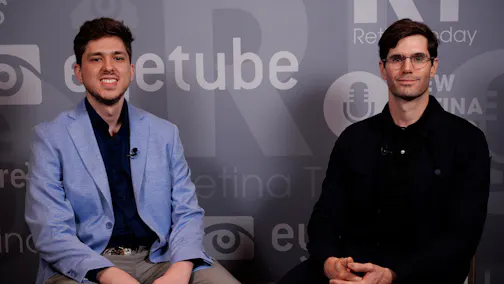
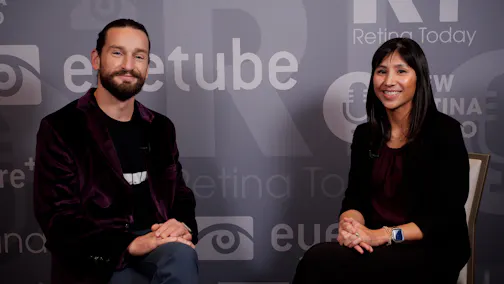
Dr. Kuriyan talks with Dr. Barkmeier about active surgical DRCR Retina Network studies. Dr. Barkmeier discusses Protocols AM and AP, which are actively enrolling for epiretinal membrane and proliferative diabetic retinopathy, respectively.
Posted: 4/29/2026
Read Transcript
Ajay Kuriyan (00:17):
I'm Ajay Kuriyan, from Wills Eye Hospital.
Andrew Barkmeier (00:19):
And I'm Andrew Barkmeier, from Mayo Clinic in Minnesota.
Ajay Kuriyan (00:23):
Andrew, we're so excited to have you here to talk about your awesome talk highlighting the DRCR surgical studies that are coming up. Tell us a little bit about what you think about when you're setting up a surgical study.
Andrew Barkmeier (00:32):
Right. So we have two actively enrolling clinical trials with the DRCR Retina Network that involve a surgical arm. And when you have a surgical arm, on top of all the normal considerations that you have in setting up clinical trials where you want equipoise between the different considerations, the different randomization arms, and you want to think through all of the analyses and the potential eventualities of the results as they come in, you also want to think about it from the patient perspective, from the clinic flow perspective to...
(01:10):
You want to make sure that if someone is randomized to surgery, that they're able to be cleared for surgery, that you're going to be able to set them up on time so the trial keeps flowing smoothly, particularly if there's a reading center involved. And so there are a few extra considerations, but the DRCR Retina Network protocols, development committees go through all of these considerations in advance and actually consult a large number of the investigators to make sure that it's likely to set up for success.
Ajay Kuriyan (01:40):
Great. Thanks for highlighting all those points. I think these surgical studies are so important, but definitely have some different considerations that we're used to with the pharmaceutical trials. Tell us a little bit about the epiretinal membrane study that you guys are doing.
Andrew Barkmeier (01:52):
Right. So Protocol AM has protocol chairs, Darrell Baskin and Matt MacCumber. And basically the question is, when we have a patient who has some moderate symptoms related to ERM and we see ERM involving the central fovea on OCT, but the visual acuity is very good, we know that these patients do fairly well with surgery. We have increasingly safe surgical procedures, better instrumentation. But it raises the question, how do these patients do with observation? How do they do with surgery? What are some of the biomarkers and participant factors that impact the likelihood of having excellent visual outcomes with the likelihood of progression?
(02:36):
There are a lot of important considerations that are very difficult to study in shorter term non-randomized formats. So this is a long-term, three-year randomized clinical trial that'll really allow us to look at this question in the way and the amount of rigor that we need to answer, a very practical question for patients we will see on Monday or Tuesday this week.
Ajay Kuriyan (03:01):
Yeah. It's going to be a really important study and will provide us that important prospective study with that long-term data. I think we're all really excited to see the outcomes from this. It's such a common problem that we see all the time.
Andrew Barkmeier (03:12):
For sure.
Ajay Kuriyan (03:13):
The other big study you guys are working on is on PDR. And so there's certainly a lot of different ways to treat it. Tell us a little bit about the study that you guys are looking at with surgical intervention.
Andrew Barkmeier (03:22):
Right. So the Protocol AP study, we're very excited to get that underway. We've been enrolling for the past couple of months. Raj Maturi is the protocol chair. And we know that PRP works well and anti-VEGF works well for PDR management. But most of us use some combination therapy, but there aren't good trials that dictate or that give us evidence for what the specific combination strategies should be. And so we're looking to set up a clinical trial that has a specific regimented protocol for combination therapy.
(04:00):
But also in this era that we have safer surgical therapies, and we know the important role of the posterior hyaloid in proliferative diabetic retinopathy, we're also looking to evaluate the impact of earlier vitrectomy surgery than we would previously consider in the past. So patients with moderate PDR are being randomized to either a combination therapy protocol where they get anti-VEGF medication every month, times three, and a complete PRP, versus a prompt surgical intervention with vitrectomy and endolaser and lifting of the posterior hyaloid. And then we're going to follow these patients longer term, for three years, to see what all the important outcomes will be of that.
Ajay Kuriyan (04:42):
Great. That's also going to be a really valuable study for our patients and also tackling a really important question for patients that we see all the time. Thanks for sharing the details about these upcoming exciting surgical trials, and thanks to the DRCR for taking on these studies. Really looking forward to the results from this.
Andrew Barkmeier (04:58):
Thanks so much, Ajay.
Ajay Kuriyan (04:59):
Thank you.
Andrew Barkmeier (04:59):
Thanks.






Please log in to leave a comment.