


Search
Search
ARDS: 2026

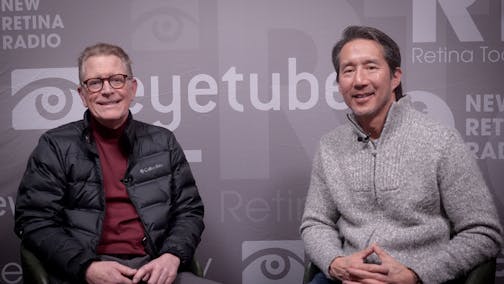
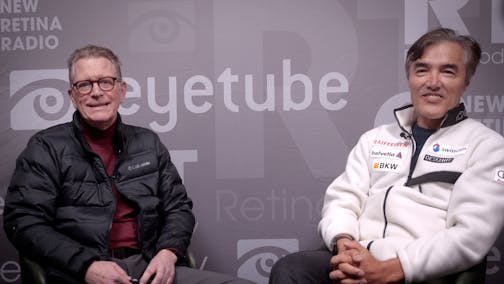
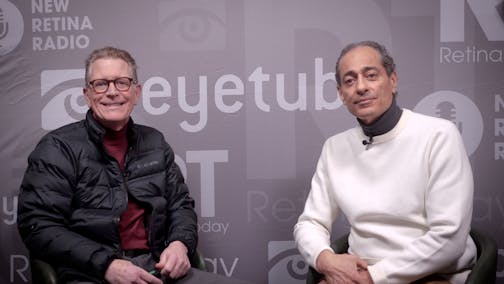
Carl C. Awh, MD, interviewed by R.V. Paul Chan, MD, MSc, MBA
Show Description +
Dr. Chan sits down with Dr. Awh to discuss innovations in vitreoretinal surgical illumination, from tungsten and halogen bulbs to the latest laser light sources.
Posted: 3/13/2026
Carl C. Awh, MD, interviewed by R.V. Paul Chan, MD, MSc, MBA
Dr. Chan sits down with Dr. Awh to discuss innovations in vitreoretinal surgical illumination, from tungsten and halogen bulbs to the latest laser light sources.
Posted: 3/13/2026
Read Transcript
RV Paul Chan, MD, MSc, MBA, FACS (00:16):
Hi, I'm Paul Chan, co-director of the Aspen Retinal Detachment Society meeting. I'm here today with one of my heroes, Dr. Carl Awh, who gave a fantastic 15th annual founders lecture titled The Light Within: Innovation in Vitreal Retinal Surgical Illumination. Dr. Awh is president of Tennessee Retina in Nashville, Tennessee, and also past president of the ASRS. Dr. Awh, thank you for being here with us. Great talk. So let's first talk about how you think light sources have changed through I think really the three decades that you've been a pioneer in this space.
Carl Awh, MD, FASRS (00:55):
Yeah, no. Thank you, Paul. They have changed. The most basic change is just the bulb or whatever that the true source is. Their earliest vitrectomies were done with an operating microscope light. Then they developed endoillumination using a tungsten bulb. When I was a fellow, halogen bulbs were new and those were very bright for the time and allowed us to have pretty good illumination, but we were operating with 20 gauge instruments. So very large instruments. When we moved to small gauge vitrectomy, which we all do now, 25, 27 gauge, those light sources were inadequate to get adequate light in the eye. That's when xenon light sources came on the scene and that really revolutionized our ability to do small gauge surgery. Now we're moving into LED light sources. And as I talked about in my lecture, laser light sources, which will really allow us to do novel things in the eye.
RV Paul Chan, MD, MSc, MBA, FACS (01:58):
Right. And I loved your lecture starting with when you were with Machemer. You gave us this transition and I remember the photon and now the laser light sources, which I think are fantastic. So when you think about the future, where are we going?
Carl Awh, MD, FASRS (02:14):
I think that although my title was about illumination, the real challenge is visualization. And so getting more light in the eye, getting safer light, getting colored light, that really can help us. The viewing systems are evolving. And I think it's that combination of illumination and viewing systems that will allow us to see things perhaps that we can't see now, and maybe we don't even need to see for our current surgeries that we do. But I can envision a time where we're operating on different layers of tissue in the eye, maybe a robot that's got a lot steadier hand than we have is doing that and we need a different way to visualize these different parts of the eye.
RV Paul Chan, MD, MSc, MBA, FACS (03:02):
Yeah. And I think we've also heard of this talk around digital imaging. So we just heard some great talks on that. And you've also talked a lot about the chandelier lighting. So maybe if you can comment a little bit how all of this is going to come together to ultimately help improve our surgical outcomes.
Carl Awh, MD, FASRS (03:19):
Yeah. I love chandelier illumination because you've get this very safe, diffuse light. You see the entire retina for say a traction detachment. When you're working on one area, it allows you to, it reminds you that something can be happening somewhere else in the eye. For retinal detachments, scleral depressing, seeing the periphery, I find easier with a chandelier. I do think that with some of the digital viewing systems that don't require as much illumination as the human eye, just looking through a microscope, a little bit of light through a chandelier that with the laser we can deliver, as I showed through a hundred micron fiber, really it's like a little thread going in the eye that lights up the inside of the eye might really change our surgery.
RV Paul Chan, MD, MSc, MBA, FACS (04:08):
Great. Dr. Awh, thank you. Amazing work. It's an honor for us that you're here with us and great founders lecture.
Carl Awh, MD, FASRS (04:15):
Well, it's a tremendous honor for me and I really appreciate the opportunity. Thank you.
RV Paul Chan, MD, MSc, MBA, FACS (04:19):
Thank you.
Bryn Mawr Communications, LLC, and Eyetube.net are not affiliated with the official program of ARDS: 2026.









Please log in to leave a comment.