


Search
Search
Show Description +
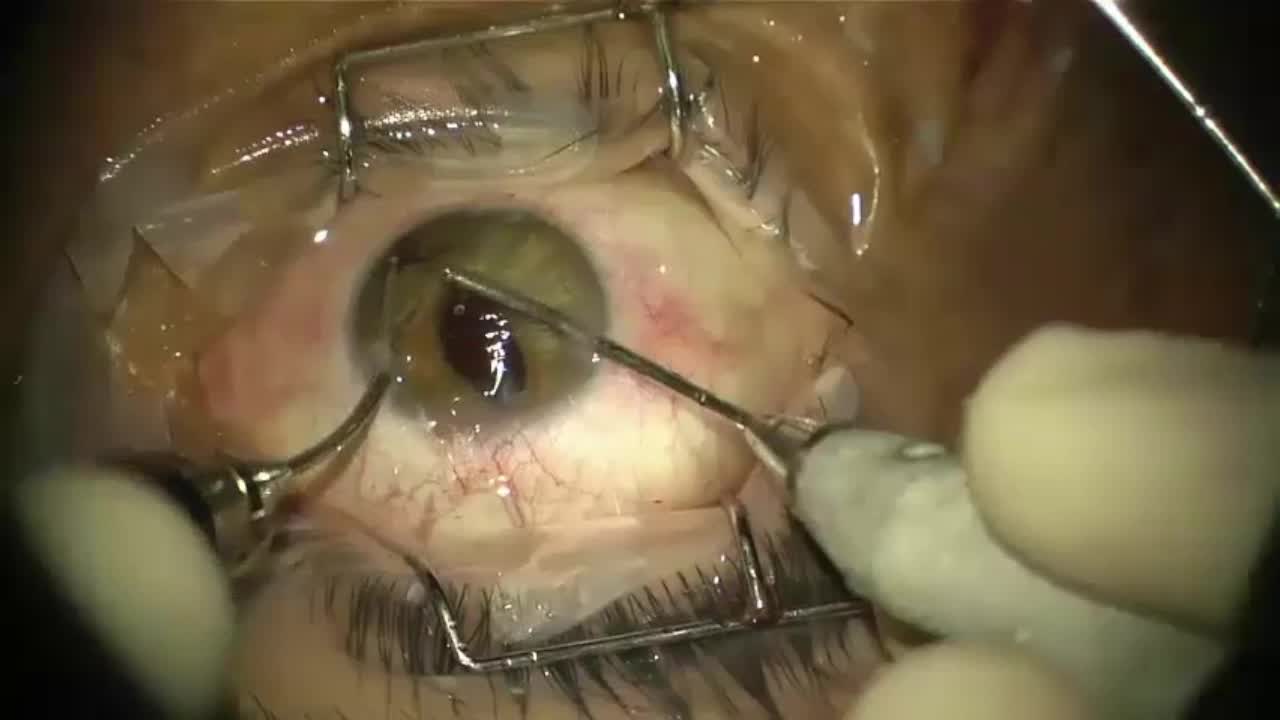
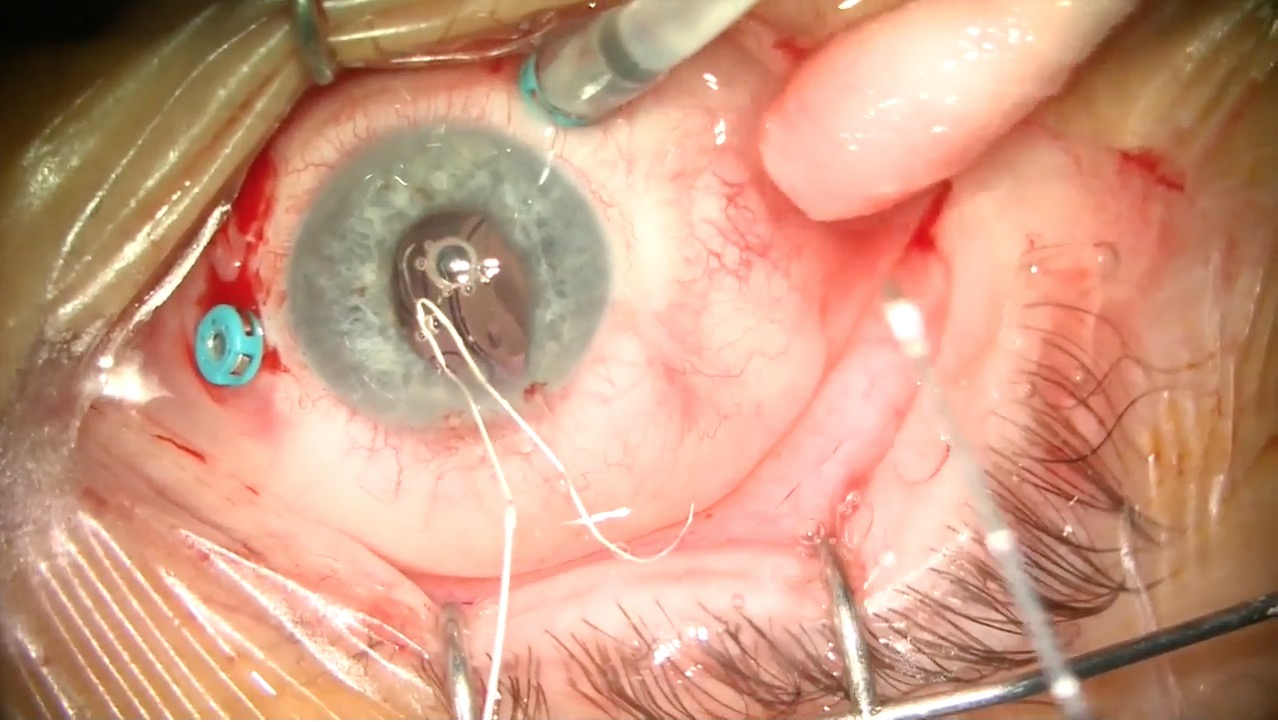
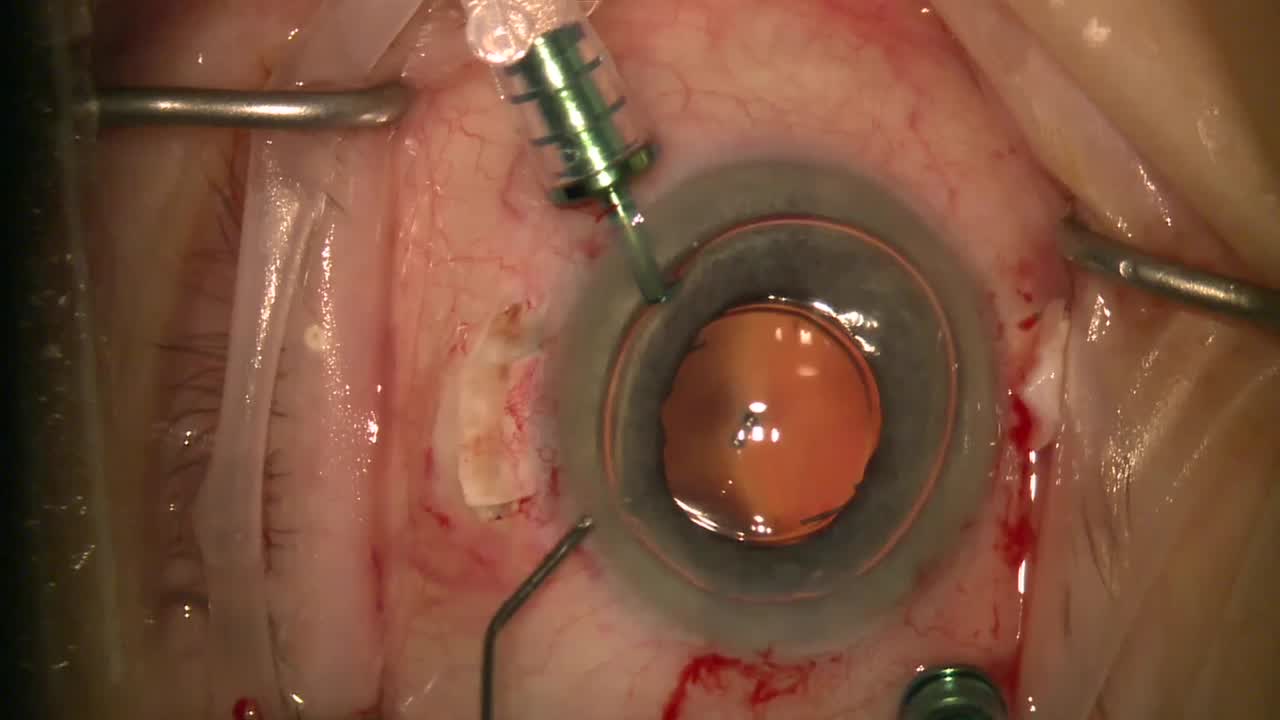
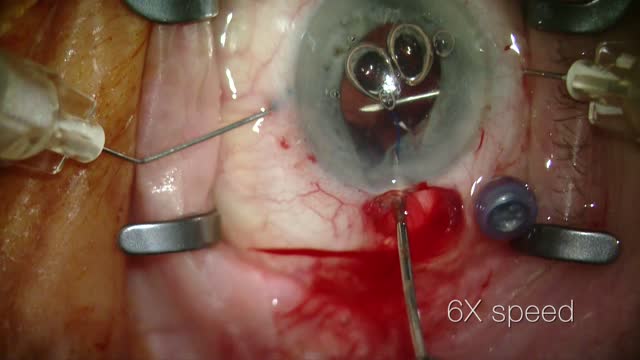
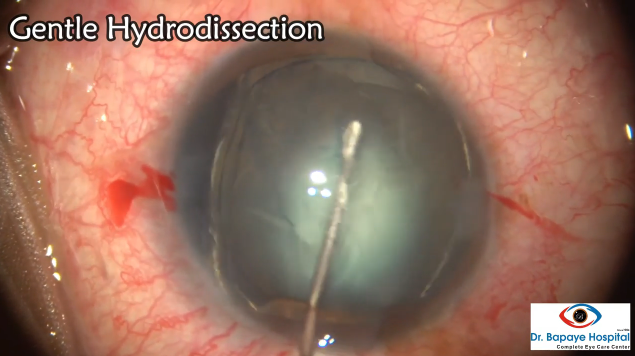
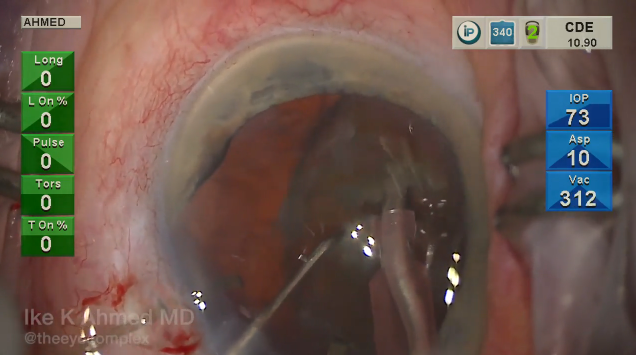
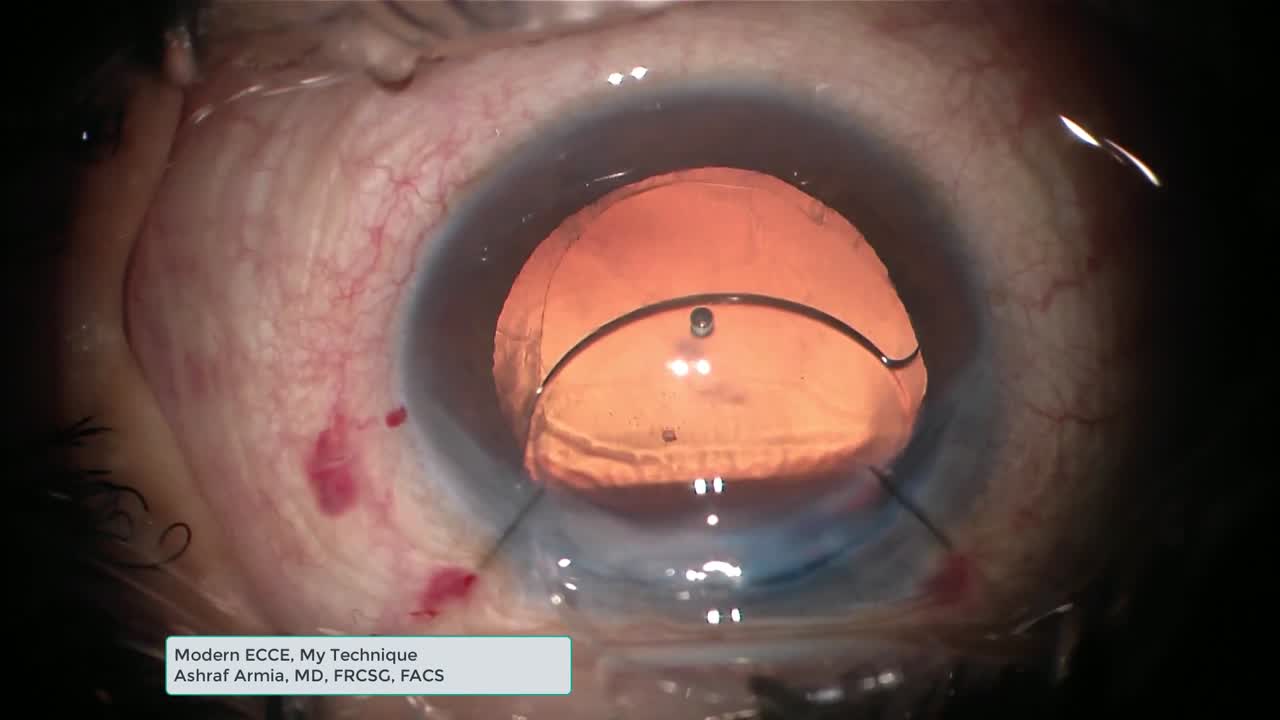
After completion of the capsulorhexis, the 22 gauge Mackool Hydrodissection Cannula is inserted beneath the anterior capsule, then slightly elevated against the capsule. Very gentle pressure is then applied to the plunger of the syringe to which the cannula is attached. An immediate, broad fluid wave will be visible beneath the nucleus. If the nucleus moves forward, it is gently depressed with the cannula. The identical procedure is then repeated at a location that is directly opposite the site of the first injection.
Dr. Mackool then performs viscodissection by injecting Viscoat beneath the anterior capsule for 180º opposite the phacoemulsification incision. [No sound]
Posted: 4/25/2012
After completion of the capsulorhexis, the 22 gauge Mackool Hydrodissection Cannula is inserted beneath the anterior capsule, then slightly elevated against the capsule. Very gentle pressure is then applied to the plunger of the syringe to which the cannula is attached. An immediate, broad fluid wave will be visible beneath the nucleus. If the nucleus moves forward, it is gently depressed with the cannula. The identical procedure is then repeated at a location that is directly opposite the site of the first injection.
Dr. Mackool then performs viscodissection by injecting Viscoat beneath the anterior capsule for 180º opposite the phacoemulsification incision. [No sound]
Posted: 4/25/2012
Sponsored Content
Sponsored Content
Sponsored Content





Please log in to leave a comment.
Comments
Just Now
Justo Mio
14 years ago
the cannula does work very well.