


Search
Search
VBS: 2026

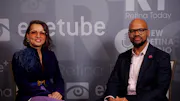
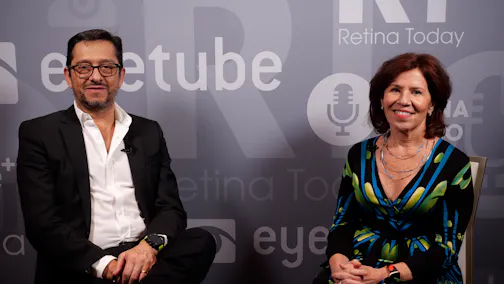
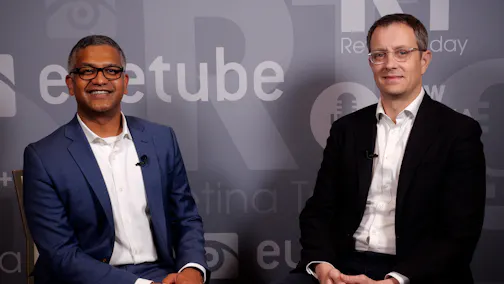
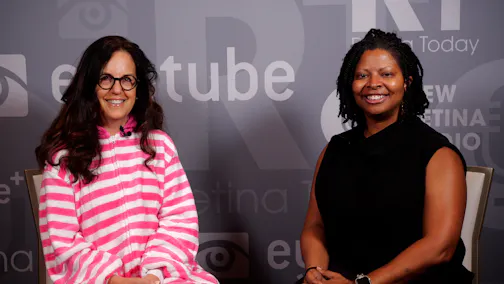
Emily Y. Chew, MD and R.V. Paul Chan, MD, MSc, MBA
Show Description +
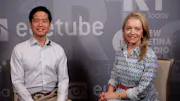
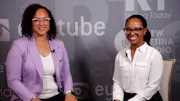
Dr. Chan interviews Dr. Chew about her career path, including the many mentors who have been instrumental in her success, and all she has learned at the National Eye Institute.
Posted: 4/15/2026
Emily Y. Chew, MD and R.V. Paul Chan, MD, MSc, MBA
Dr. Chan interviews Dr. Chew about her career path, including the many mentors who have been instrumental in her success, and all she has learned at the National Eye Institute.
Posted: 4/15/2026
Read Transcript
R.V. Paul Chan, MD, MSc, MBA:
Hi, I'm Paul Chan here at the 2026 Annual Vit-Buckle Society Meeting in Las Vegas, Nevada. It's my great honor to be here with Dr. Emily Chew. Dr. Chew is the recipient of our 2025 Lifetime Achievement Award. She is the Director of Epidemiology and Clinical Applications at the National Eye Institute. I can't think of anyone more deserving, Dr. Chew, to receive this award. Great conversation with Dr. Berrocal during the session. You've done so much for our profession. Maybe during this discussion right now, maybe just talk a little bit about your mentors, mentorship, and maybe share a little bit about what you think the next generation of ophthalmologists and leaders can do for our profession going forward and make an impact.
Emily Y. Chew, MD:
Well, that's a lot, but thank you so much. This is such a great honor to have this incredible title and this Life Chief of Award is really marvelous. Thank you so much. So I'm very grateful for all the mentors I've had because I don't think we would be here without our mentors. They're such a key part of determining our careers and encouraging us and supporting us and really getting the place where we need to be. So as a student, I was really pleased to meet Dr. Brenda Gallie, who was a great name in retinoblastoma. And she made me understand the importance of research and really attracted me to ophthalmology. I'd be doing rheumatology otherwise, counting joints. So here I am doing ophthalmology. And then along the way during my residency, there were really impactful folks who were really incredibly powerful. She was one of the few women leaders that we had.
Then I went to Wilmer where there was a lot of impactful people who were doing clinical trials. And that was sort of my next station in the life to learn that. And I really had not... I got really excited about that from them. And that really got my career going as well. And Arnall Patz was the director there, and he was just very kind and very supportive of all his trainees and helped me with that as well, as well as all the mentors I had there, Dr. Irene Maumenee, Stuart Fine. So they were really crucial. But then there was also your peer mentors as well too. We call ourselves the Wild Ladies, the women of Wilmer, and that's Julia Haller, Mary Lynch, Anne Hanneken and Patty Smith.
And so we mentor each other as we move towards our career, and we still do. We're still very close friends. So that's really helpful. But then going to the Eye Institute, I learned a great deal from Rick Ferris, who was the master of clinical trials. I thought I'd go to NEI and learn the business and then go somewhere else. But the opportunities and the great opportunities and also the camaraderie of all the people who are there and the different people that I could work with because there's so many different specialties and just people who are so great in their field that it was really hard to move away from that. And the fact that we had a lot of support from our institute directors at the point, it was really, really important. So that's really shaped my career a great deal. Going forward, as a woman who's seen a lot of different things that's come through, and you heard a lot of that in our conversation. I'd like to see more transparency on how decisions are made.
The National Institutes of Health where I work, we have an equity committee where we looked at the statistics, and I think that's a key, is to look at your data. I'm a data person. Looking at the data is really important. So for example, in 1992, we realized that 16% of the women at NIH were tenured, and that means they have full responsibility, lots of resources, space and money and personnel. In 2026, we went up to 26%. So in three decades, we increased by 10%. So there's a problem there. So we went to our director who basically said, "We need to look at this." So the transparency is that we now have the institute director in the past, not right now, but in the past, we've been having them come and say, "This is what our numbers are this year."
So every two or three years, they look at it. So if you look and see where things are, then you can correct them. So I think the transparency is really important. Making sure that everyone has equal opportunities with similar amount of resources, space, funding, personnel, because if you don't have that, you're not going to achieve the same. And obviously the mentoring there also helps and they mentor others and it's a cycle that goes on, so it's really important.
R.V. Paul Chan, MD, MSc, MBA:
Great. And then if you had to, maybe this is the last question, if you had to think about what you're most proud of in your career, what would you say?
Emily Y. Chew, MD:
Most proud of. Well, there's several things I'm really proud of. I'm proud of the family we've created, the people we've trained. They've gone on to really good things. So it's the multiplying effect that that's really important. I think that part's really important. And I'm really, really, very proud of the fact that we were able to bring drugs to patients. That really made a difference. I still remember the day when we looked at belzutifan, which is the drug for Von Hippel-Lindau's disease. I've been treating for three decades, these patients with optic nerve tumors. As you know, those patients go blind because we can't treat them. We do radiation. Nothing seems to help. But within a week, we saw the tumors shrink and we call up our urologist and neurosurgeons and say, "Come down right now, look at these photos." And it was just such joy to see that. That's probably one of the most joyous days that we've seen. So I think being able to help patients, translate it for patients, and then bringing forth the next generation, I think is very, very important for all of us to move forward with.
R.V. Paul Chan, MD, MSc, MBA:
No, it's wonderful. Dr. Chew, thank you so much. Thanks for everything that you've done for our profession and for, I'd say, generations of leaders going forward.
Emily Y. Chew, MD:
Thank you for all you do, and thank you for this great honor. Really appreciate it.
R.V. Paul Chan, MD, MSc, MBA:
Of course.
Bryn Mawr Communications, LLC, and Eyetube.net are not affiliated with the official program of VBS: 2026.


Please log in to leave a comment.