


Search
Search
AAO: 2026

Show Description +
Dr. Ho highlights the many gene therapy programs that may help to improve vision and reduce treatment burden for patients with wet AMD, including sura-vec (ABBV-RGX-314, Abbvie/Regenexbio), ixo-vec (ixoberogene soroparvovec, Adverum/Eli Lilly), and 4D-150 (4D Molecular Therapeutics).
Posted: 10/21/2026
Read Transcript
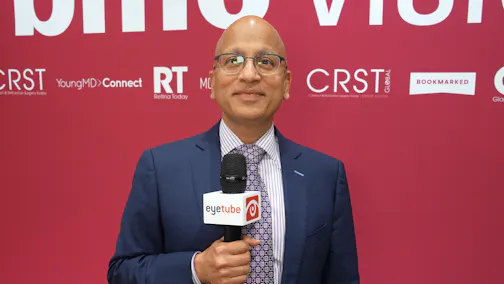
Hi. I'm Allen Ho, the Director of Research at Wills Eye Hospital, and here in New Orleans at the American Academy of Ophthalmology I spoke about gene therapy for AMD, age-related macular degeneration. And the highlights of my presentation include that the context of gene therapy, first of all, gene therapy in all of medicine started in the subretinal space in 2017, thanks to Albert Maguire and Jean Bennett, for a specific Leber congenital amaurosis, specific retinal degeneration. And now, gene therapies have been approved across 30 indications in all of medicine.
And we may be bringing it back to the subretinal space soon, because the point of my talk was to highlight some of the pivotal programs from three different companies. There are more than three that are involved in gene therapy for wet AMD, but the AbbVie/REGENX subretinal program, the Adverum/Lilly intravitreal program, and the 4DMT intravitreal program all are reporting on pivotal data results for patients with wet AMD, and using gene therapy to create a biofactory to try and improve outcomes and reduce the need for injections.
We will hear soon, in December, in like eight weeks, on the results from the global AbbVie/REGENX program, and I think it's going to be very exciting for a couple reasons. One, it's the largest gene therapy program in all of medicine. Two, we need something that is, in my view, not so much reducing the need for injections. Yes, injections I think will always be in the background, but we need something that improves vision for patients compared to our current regimens, and maybe the pharmacokinetics of steady-state biofactory production like we see in, for example, port delivery, with longer-term outcomes where vision doesn't drop off.
My hope is that gene therapy establishes the safety and the efficacy for better vision over time. It's a really important problem that we have. Commercial access will be another issue and we shall see, so stay tuned. Recently we've had gene therapy reports for a approved therapy for a genetic form of deafness. Last month we heard about subretinal surgery and gene therapy for patients with X-linked retinitis pigmentosa from the Beacon Group being positive. Just this week, we had three scientists globally get awarded the Nobel Prize in Medicine for the human health potential of optogenetics. So pay attention to gene therapies, and pay attention next month for gene therapy for wet AMD.
Bryn Mawr Communications, LLC, and Eyetube.net are not affiliated with the official program of AAO: 2026.














Please log in to leave a comment.