


Search
Search
ARDS: 2026

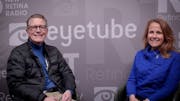
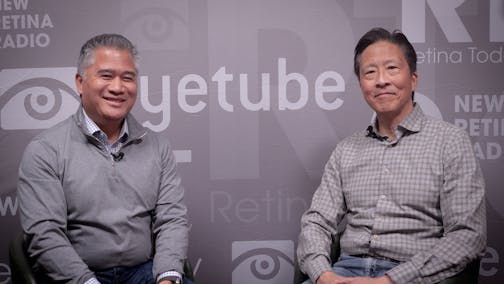
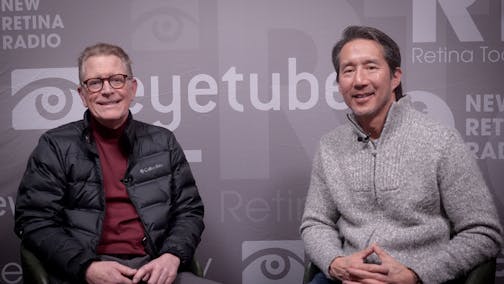
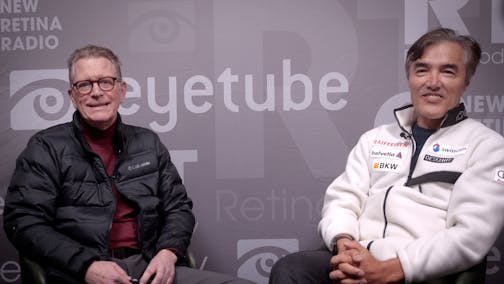
Robert L. Avery, MD, interviewed by R.V. Paul Chan, MD, MSc, MBA
Show Description +
Dr. Chan asks Dr. Avery to share the many ways in which AI is being used in today's retina practice, from streamlining billing and patient education to better clinical trial screening and data analysis.
Posted: 3/13/2026
Robert L. Avery, MD, interviewed by R.V. Paul Chan, MD, MSc, MBA
Dr. Chan asks Dr. Avery to share the many ways in which AI is being used in today's retina practice, from streamlining billing and patient education to better clinical trial screening and data analysis.
Posted: 3/13/2026
Read Transcript
R.V. Paul Chan, MD, MSc, MBA (00:16):
Hi, I'm Paul Chan, co-director of the Aspen Retinal Detachment Society meeting here at our annual meeting live from Snowmass Village. I'm here speaking today with Dr. Bob Avery. Hi, Bob. Thank you for being with us. He spoke on AI in the practice of retina. Dr. Avery is the founder of California Retina Consultants in Santa Barbara, California. Dr. Avery, great talk on AI. If you can just give us an overview about how you think AI is being used currently.
Robert L. Avery, MD (00:47):
Thanks, Paul. I think AI is really crept into many crevices within our practice of retina. It started with screening. We had the first AI approved anywhere in the body, and that was for diabetic retinopathy screening. And it's progressed into the way we detect diseases early in our office, and also how we monitor patients, and even how we manage them. And it's really something that's not just, I call up ChatGPT to see what this sort of diagnosis is, but it's also more of the way we can manage our practice in a lot of different ways. Even staffing is now being helped by a new AI assisted scribe that's embedded inside one of the commonly used electronic medical records and private practice. The way we do research trials, enrolling patients, how we are able to screen them more rapidly and pick the right ones so we don't have screen failures that uses AI.
(01:49):
How we interpret, for instance, geographic atrophy is something that's controversial to treat, but if you use AI to look at the ellipsoid zone, you can sort of select the best patient population to treat and tell who's going to progress faster and therefore needs treatment. There are lots of ways AI has worked its way into our practice now, and there are more coming in the future from how it helps us manage practices. Once we get AI that sort of works with both the EMR and our clinical images, it can help guide our treatment regimens and what we should use and when we should use it for the injections that should become such a big part of our practice. So there are lots of ways that AI is affecting us now and even more so in the future.
R.V. Paul Chan, MD, MSc, MBA (02:41):
Yeah. And I think one of the interesting conversations that we had during your talk, during the discussion, was around how AI is being implemented for clinical trials work. So maybe can you talk a little bit about how your practice is working that in and maybe others in the community?
Robert L. Avery, MD (02:59):
Well, we've started using AI to sort of pre-screen images for geographic atrophy through the Wisconsin Reading Center, sort of has an app that does that, shall we say. But there's also the way to screen a database and not just the EMR side, but the image side. And with retina AI, working with RCA and such, we're able to put a lot of data into their system and it will help us pick patients who are ideal for certain trials. The trials have become a lot more specific with what they're looking for and screen failures are just a waste of everyone's time and money. And so if you can sort of select the population likely to meet all the criteria before you go through all the explanation of the trial, it helps everyone. And also AI is being used a lot in trials because using, for instance, GA, using the ellipsoid zone in different ways may help us sort of enroll the right patients in trials.
(04:01):
And it's the endpoint for certain trials. Stealth trials has shown that we can use it as an endpoint with the FDA, which is great for something that progresses really slowly like GA.
R.V. Paul Chan, MD, MSc, MBA (04:12):
Okay. So with that, Dr. Avery, thank you so much for being here. Great talk. Really a pleasure to have you here at Aspen.
Robert L. Avery, MD (04:18):
My pleasure, Paul. Thank you so much.
R.V. Paul Chan, MD, MSc, MBA (04:20):
Thank you.
Bryn Mawr Communications, LLC, and Eyetube.net are not affiliated with the official program of ARDS: 2026.








Please log in to leave a comment.