


Search
Search
ARVO: 2026
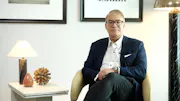
Show Description +
Dr. Schlottmann shares results of the phase 3 SOL-1 trial of intravitreal axitinib hydrogel (OTX-TKI) for the treatment of wet AMD, which showed good durability with 75% of patients treated with OTX-TKI being rescue-free at 36 weeks versus 55% in the aflibercept comparator group.
Posted: 5/13/2026
Dr. Schlottmann shares results of the phase 3 SOL-1 trial of intravitreal axitinib hydrogel (OTX-TKI) for the treatment of wet AMD, which showed good durability with 75% of patients treated with OTX-TKI being rescue-free at 36 weeks versus 55% in the aflibercept comparator group.
Posted: 5/13/2026
Read Transcript
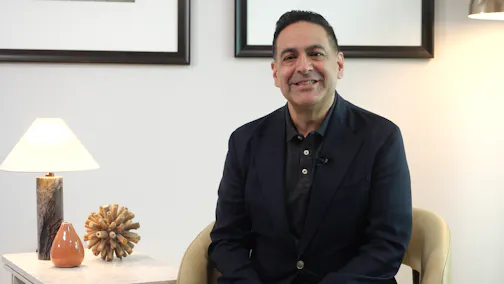
Hello everybody. My name is Patricio Schlottmann. I'm a retina specialist from Buenos Aires, Argentina. Here we are in Denver attending ARVO 2026 meeting and I have just presented the results of the SOL-1 study. The SOL-1 study is the evaluation of safety and efficacy of OTX-TKI in patients with wet AMD. This is a study that was done in patients that were treatment naive and it was compared with a standard of care, which was aflibercept. These patients were evaluated for regular visits every four weeks until the primary endpoint of the study at week 36. And what we found out is that the level of rescue, the proportion of patients being rescued because they met the rescue criteria, which was 15 letters of more of drop in vision, was 75% of the patients in the OTX-TKI group were rescue-free while 55% of the patients in the aflibercept group were rescue-free.
We also presented the data in a different way, because that is more clinically applicable for the doctors looking into the treatments that they may have for the patients in the future. So we constructed some Kaplan-Meier survival curves and we found that the time difference to which you reach a 32% of patients receiving first rescue injection is 28 weeks for those patients being treated with aflibercept, and it's 52 weeks for those patients being treated with OTX-TKI. That shows the durability of six months difference to achieve the same event rate of 32% of the patients with one rescue injection. This is very interesting data and I just want to highlight that the SOL-1 study will be complemented by the SOL-R study and at the end of these two studies, we're going to have the SOL-X, which is the extension study. So we are going to have a lot of information on how to better use these tyrosine kinase inhibitors, this new treatment that work intracellularly for the best of our patients.
Thank you.
Bryn Mawr Communications, LLC, and Eyetube.net are not affiliated with the official program of ARVO: 2026.





Please log in to leave a comment.