


Search
Search
David Chang MD, Rengaraj Venkatesh MD
Show Description +
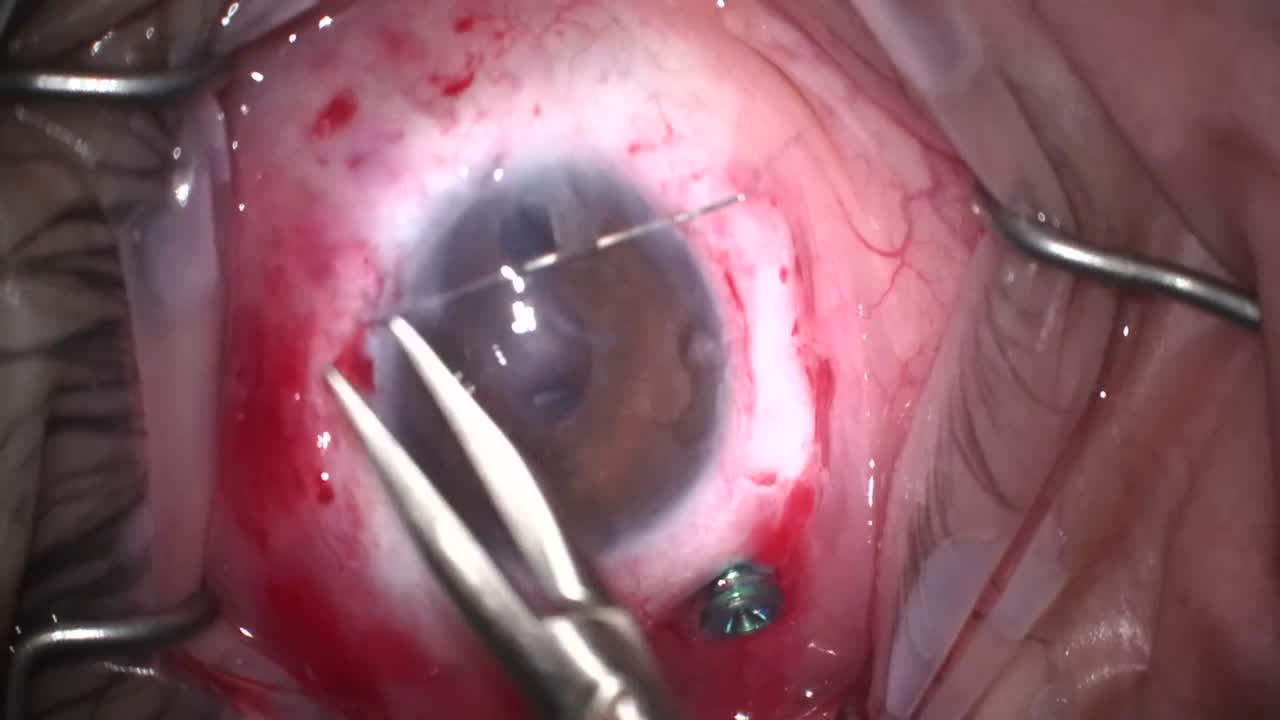
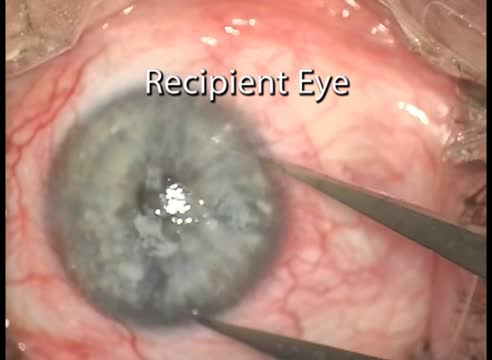
In his 2009 Binkhorst Lecture, honoree David F. Chang, MD, highlighted efforts to eliminate cataract blindness in India and the developing world. In this film, Dr. Rengaraj Venkatesh performs a manual sutureless ECCE at the Pondicherry Aravind Hospital in Southern India. The streamlined process involves re-use of most instruments, a locally manufactured PMMA IOL, and alternating between two adjacent OR tables without changing gowns and gloves. Coupled with remarkable teamwork of the support staff, a single surgeon is able to perform 12-16 procedures per hour at a cost of approximately $15 per case.
Posted: 4/15/2009
David Chang MD, Rengaraj Venkatesh MD
In his 2009 Binkhorst Lecture, honoree David F. Chang, MD, highlighted efforts to eliminate cataract blindness in India and the developing world. In this film, Dr. Rengaraj Venkatesh performs a manual sutureless ECCE at the Pondicherry Aravind Hospital in Southern India. The streamlined process involves re-use of most instruments, a locally manufactured PMMA IOL, and alternating between two adjacent OR tables without changing gowns and gloves. Coupled with remarkable teamwork of the support staff, a single surgeon is able to perform 12-16 procedures per hour at a cost of approximately $15 per case.
Posted: 4/15/2009




Please log in to leave a comment.
Comments
Just Now
DR SHOBHANA PARIYANI
6 years ago
I worked in Aravind Eye Hospital Madurai ,I was Medical Officer in Vitreo Retina but trained for ECCE, small incision surgery by this institute I suggest every Ophthalmologist one time they should visit the operation theaters I really enjoyed cataract surgery early morning going to OR, drinking Satho (protein shake) and doing cataract surgery 5 cases, then 7 cases then 10 cases wonder ful surgical exposure . I assisted Dr Nam wonderful hands retinal surgery the confidence and big hands and fast moving fingers it was my luck I worked with him and worked in this institute regards to Dr Nam and DrNachiar
mohamed afify
15 years ago
GREAT work
Mahmoud Rateb
15 years ago
Thanx for all the videos, I used to do this technique in our patients in Egypt(same type of patients as in India) , it was great but I use more Viscoelastic inside the eye , I feel more safer and less traumatic to the endothelium
parthasarathi gayan
16 years ago
it was an honor to be trained by Dr MRV at pondicherry...will always cherish the 2 yrs i spent at aravind, pondicherry...
Roberto Levi
16 years ago
Congratulation, but this is not a new technique. The developer was dr Blumenthal from Tel Aviv back in 92 when he used for the first time the watertight sclerocorneal tunnel. In the original Blumenthal's technique no viscoelastic and no vectis is used as an acm (anterior chamber is used all through tne procedure. I learnt the technique from Blumenthal and eversince practiced it in hospitals of the Milan area in Italy. These techniques are absolutely competitive with phaco.
Bülent Hepdo?an
16 years ago
Congratulations:)
patricia mcgettrick
16 years ago
If the surgeon puts a thin layer of viscoelastic on the cornea at the beginning of the case the cornea will stay moisturised and transparent without the need for continuous irrigation. Labour and finance saving.!
Valdemar Kjaer
16 years ago
The ability of surgeons, the beauty and simplicity of this technique deserve all our praise. Unfortunately, most of the world have no access to phacoemulsification or even to ophthalmologists. Of course, the final outcome and complication rates are higher in this technique than with phacoemulsification (astigmatism, endothelial decompensation, flat chamber etc..). We physicians must strive to teach more surgeons and fight to the technology get cheaper, so that the best options are available to all. But, meanwhile, we really should learn and use techniques like this to improve the quality of life of those living in the developing world. Congratulations to the authors!
Mrak Bernard
16 years ago
Fantastic! "Greath medicine" is very relative and elastic therm, but this is JUST greath!
sathian Nagamalai
16 years ago
Dear venkatesh sir , i am into eyetube. excellent video.
mervat omear
16 years ago
very nice job dr mervatomear
John Lee
16 years ago
I was fortunate to witness this technique firsthand at Aravind Eye Hospital in Madurai last year. I even had the opportunity to try Small Incision Cataract Surgery, as it is called there, myself a couple of times. I am still amazed at the efficiency and professionalism of the staff and physicians there, and I would not hesitate to put them up against any "modern" eye team. It was an outstanding learning and spiritual experience, one I would not trade for anything. My hat's off to the Aravind Eye team!
julio Rubio
16 years ago
Julio Rubio M.D.
marcos gomez
16 years ago
We have a lot to learn in "developed" countries from this video. First to admit that many first class OR reutilise disposables, viscoelastics or phaco lines, ( but without the precautions mentioned in Aravind´s hospital protocols). Second, to accept that many countries in first world have plentyfull of underserved people with long waiting lists that could benefit from this excelent management.
Benjamin Ticho
16 years ago
Very good technique for developing countries with limited number of ophthalmic surgeons. Hard to believe there aren't occasional wound leaks, as a shelved incision of this size takes a few days to seal.
Usha Kim
16 years ago
Excellent video. It is a very effctive and safe method of cataract surgery. It is also a good alternative to phacoemulsification especially in community outreach programs where the volume is more.
murali ariga
16 years ago
nice videos Dr Venkatesh - this technique should become one of the preferred procedures for high volume surgery in underprevileged communities world wide. Good work !
marcos gomez
16 years ago
what about disposables? what about sterile technique and universal precautions? Is it time to reconsider our actual sterile protocol? What about prions and TASS?
ademir regatieri
17 years ago
gostaria de ter a mesma habilidade para esta cirigurciapabens aos colegas da INDIA
ninh tran
17 years ago
good job.
Regitha Siva kumar
17 years ago
It is great job.
Ranjith Kumar Manoharan
17 years ago
Great Job
Luis Mendonca
17 years ago
Uaaaaaaaaaauuuuuuuuu!!!
Luiz Teani
17 years ago
Much better than phaco for very dense nucleus. I do accurately the same.
David Chang
17 years ago
In response to the question from Dr. Jrosensh, there are two specific studies to mention. The pictured surgeon, Dr. Venkatesh, is a co-author on both of these published studies. <p>
rajasekhar gajulapalle
17 years ago
dear Jrosensh,
Rengaraj Venkatesh
17 years ago
Thank you Dr.Rajasekar, Dr.H and Dr. Chang...good to see lot of interesting comments and observations about this video. More than the published results, it a fact that millions of people in India who have benefitted by this low tech, low cost,high quality technique. The complications when compared to Phaco in dense cataracts is very less and the speed of the technique is difficult to believe unless seen firsthand. Other than Aravind, many other centers in Nepal and rest of developing world practise this technique. It is incredible to see Dr.Ruit in Kathmandu and Dr.Henning of Lahan, Nepal do this technique. Dr.Henning uses a simple instrument of fish hook (modified 26g needle)and many surgeons trained by him do this amazing technique with high quality results.
ari weitzner
17 years ago
there was an article in ophthalmology journal a couple of years ago comparing this technique side-by-side with an excellent phaco surgeon. va and cornea were better in the extracap technique! no difference noted 4 weeks post op. this technique is a slam dunk.
Joseph Rosenshein
17 years ago
OK, but what are the outcomes, complication rates, etc.? This may be a fast technique, but how safe and effective is it? What, if any, do followup studies show?
Mark Hornfeld
17 years ago
I saw this first hand in 1996 at Aravind and also at Tel Aviv with Dr. Blumenthal. Great alternative to phaco
Ioannis Parasyris
17 years ago
just amazing... seems elementary but effective under those circumstances .
Patricia González
17 years ago
Veru very good
ERNESTO DUARTE
17 years ago
go, go, go
Diclehan Ali Dicle
17 years ago
Gr8!!
ari weitzner
17 years ago
holy mackeral. this guy is incredible. bravo!
Nilson Nishizawa
17 years ago
Very good!
Mario Zambrano
17 years ago
Great!
View More